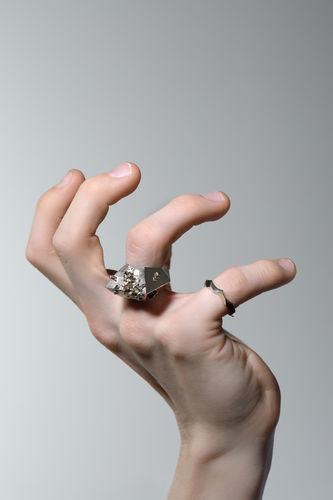
What prompted you to start designing jewellery?
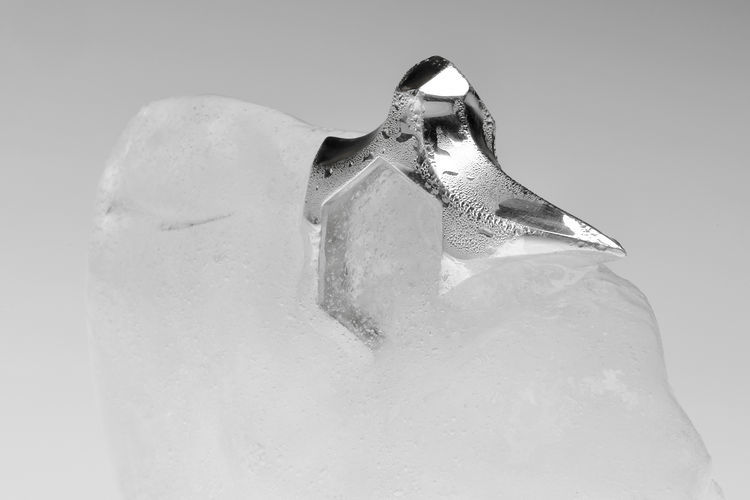
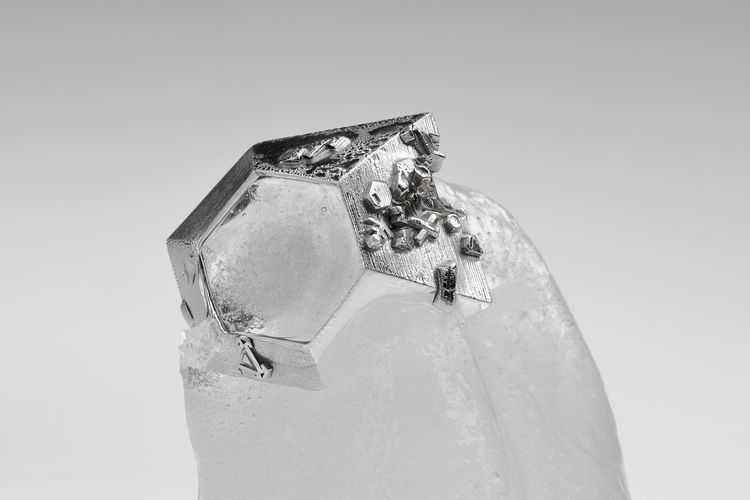
I have always been fascinated by Nature and with the strong relationship we can have with our jewellery — how it reminds us of someone, somewhere or some time in our lives. It is why I wanted to create jewellery which creates a connection between us and our planet, and more specifically jewellery which sparks interaction and discussion about climate issues.
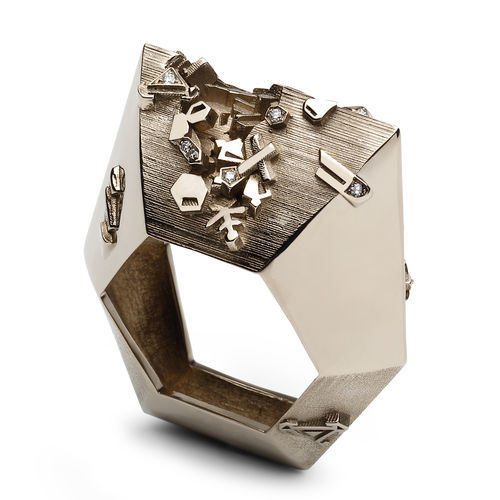
What would you say is your ethos as a designer?
To create jewellery with meaning that carries a deep message about protecting the Earth, also jewellery which brings joy to my clients. I think to be a good designer, sustainable designs and timeless piece are what’s required, which is why I don’t try to follow trends. I care deeply about taking a responsible approach to my practice. I only work with re-cycled 18 karat gold, ethically sourced diamonds, and unheated and untreated sapphires. I also make the jewellery myself in Paris, and I aim to give back a part of my profits to an NGO working on protecting the planet.
Where does your inspiration come from?
When you are curious the world and Nature becomes fascinating and can be an infinite source of inspiration. In second place is science. I’ve always loved the sciences and to understand how and why things work around us. And last, but not least, I want to highlight climate change issues through my jewellery, so climate crisis phenomena are my last source of inspiration.

What impact has the last year had on you as a designer?
It has impacted so many things. Last year I was a student at Central Saint Martin’s. Because of Covid I had to come back to my country, France, so I couldn’t finish my degree properly. It was a really bad time. Then, I became more resilient and decided to start my own business. I was in lockdown, I had nothing else to do than work. I worked a lot and, for sure, it helped me not to become crazy. On the other hand, it was hard to stay motivated and stimulated. When you are a designer, you need to see people and exhibitions, you need live experiences to be creative.
What have you done to adapt to these changing times?
I have learnt to work a lot from home — where I have set my studio— and I try to go to my suppliers such as the casting workshop or stone setter, only once a week. I also try to spend more time working on my mental health, because I can easily become anxious.
What are the lessons you have learned from the last year?
I had to learn to be more resilient and to accept disappointment. When I realised that I wouldn’t be having a physical Degree Show, and I wouldn’t see my school friends anymore, it was hard. Now, every time I plan something, until the very last moment I think about everything which could go wrong and try to accept it. If anything, 2020 has taught us that we can’t control everything, and that’s okay.
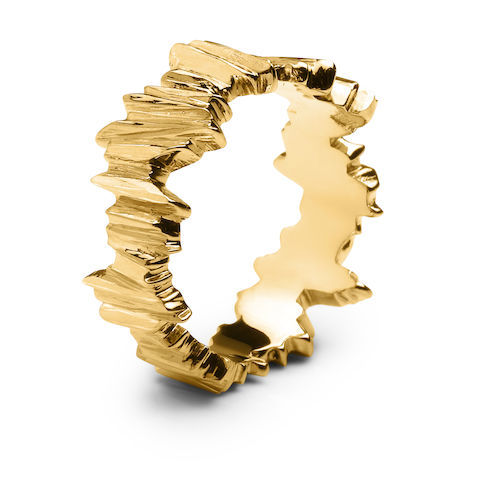
Do you see technologies such as CAD/CAM, potentially taking the place of traditional craftsmanship?
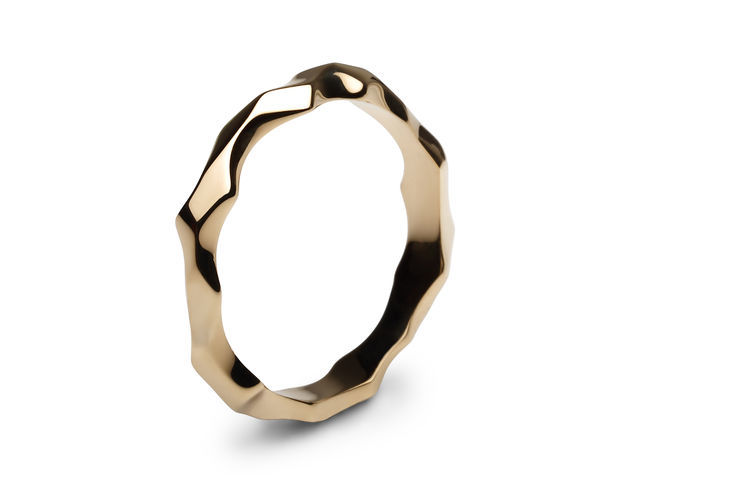
I don’t think new technology will take the place of traditional craftsmanship — I am convinced they must be used together. In my practice I work with both, and none is better than the other, they just allow me to do different things. For instance, I do a lot of wax carving, which is perfect to get organic design and convey emotions, but CAD allows me to create jewels with tiny details that I couldn’t create by hand, and to create new textures that I love.
What attracted you to becoming associated with NouvelleBox?
Well, I wanted to become associated with NouvelleBox because I was just starting my business. I didn’t know how this part of the industry worked, so I was relieved to get support and a platform to easily connect with retailers.
Why do you think community is so important within the jewellery industry?
Community is so important because it is a small world. We are all connected, and we should try and support each other. We all share the same passion, so let’s use it to create meaningful relationships, whether it is with retailers, clients, suppliers, or other designers.
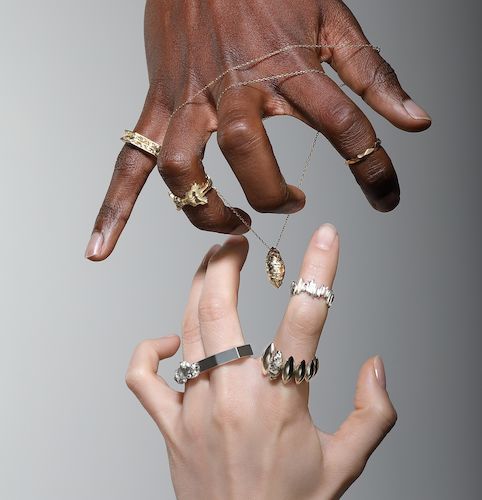
How do you see your relationship with retailers?
To be honest I don’t have one for now, but I am looking forward to working with retailers. And, as I have previously stated, working with NouvelleBox is the step forward I am taking to help establish retail relationships.
What do you do to promote your work to both customers and retailers?
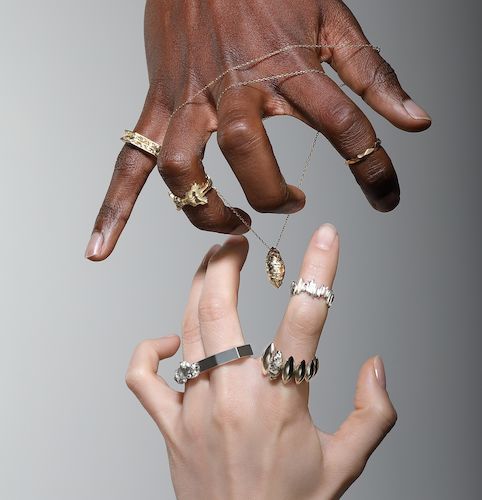
I use social media a lot, especially Instagram. It is where I am the most active. I try to share my work, my studio, my ongoing projects, the bespoke jewels I work on, and to show what is behind my company. I also take part in doing photo shoots for magazines which is great exposure.
How important is sustainability to you as a designer?
It is so important. I personally think today you can’t be a designer if you don’t think about sustainability. A designer’s mission is to create, and when you create you think about the materials, where they come from, who is going to make it, in what conditions, at what cost and the impact on the planet. For me, “sustainability” is the key word for being a good designer.
How important is networking, be it physical or online, for you as a designer?
Really important, because, as I said earlier, the jewellery industry is a small world. I love meeting new people and learning about new approaches and new techniques. It challenges me. It’s also important to know what is going on in the industry, and to support my peers. I prefer physical networking. For me, this is the only way to get a real connection with people. However, the last year has shown us that we can adapt and still meet people and network online. It’s not the same, but it’s doable, and allows us to meet people all around the world.
How do you think the jewellery industry has been able to deal with the last year and is it time for the industry to become nimble and adaptable?
It was a shock that became a huge opportunity. Now, the way people buy online has totally changed and for small businesses like mine it’s great. Social media and online shopping have given space to new designers who can’t afford a bricks-and-mortar shop. Moreover, I hope that what happened makes us think about the way we consume and will initiate a change — to produce more locally or purchase on a made-to-order basis. I also hope people will focus more on quality and not quantity. After all, fine jewellery is something precious to be desired and cherished for a long time.
Contributors
 Darren Hildrow
Entrepreneur & Business Strategist+ MORE FROM Darren Capucine H+ MORE FROM Capucine
 Elisa Anniss
Jewellery & Accessories Editor/Copywriter+ MORE FROM Elisa