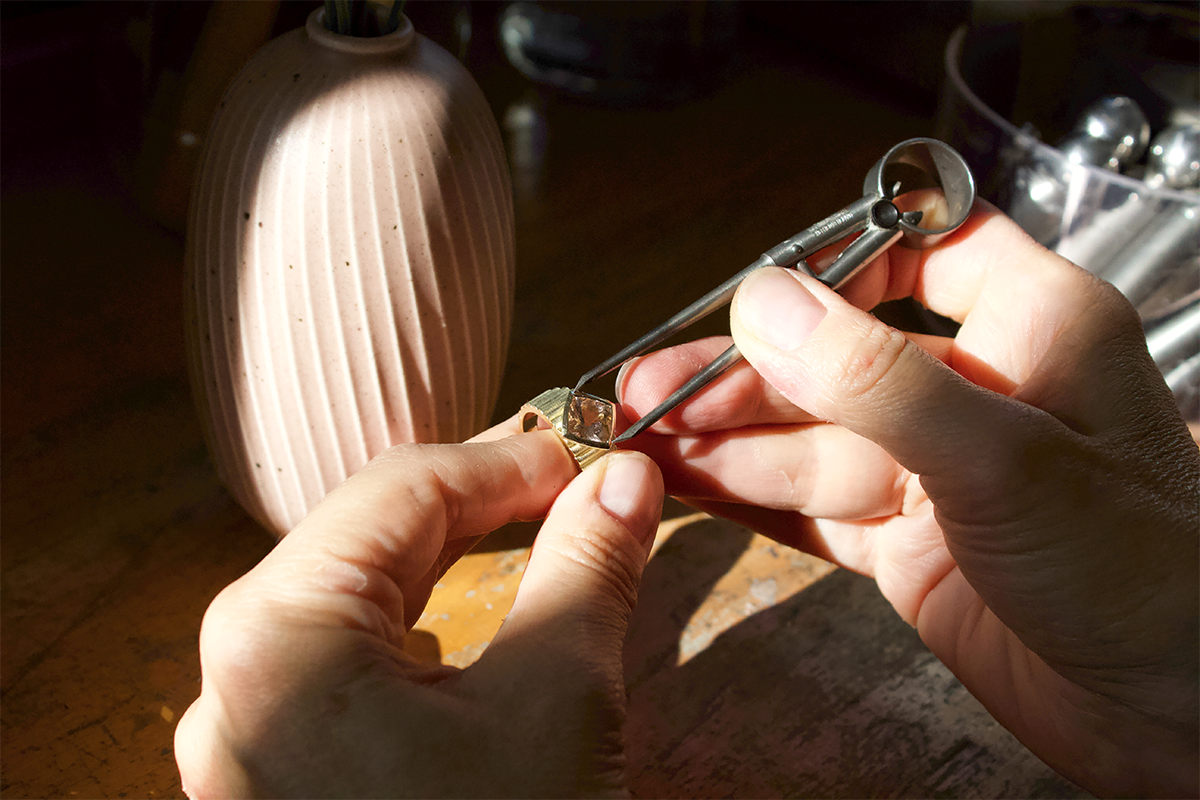
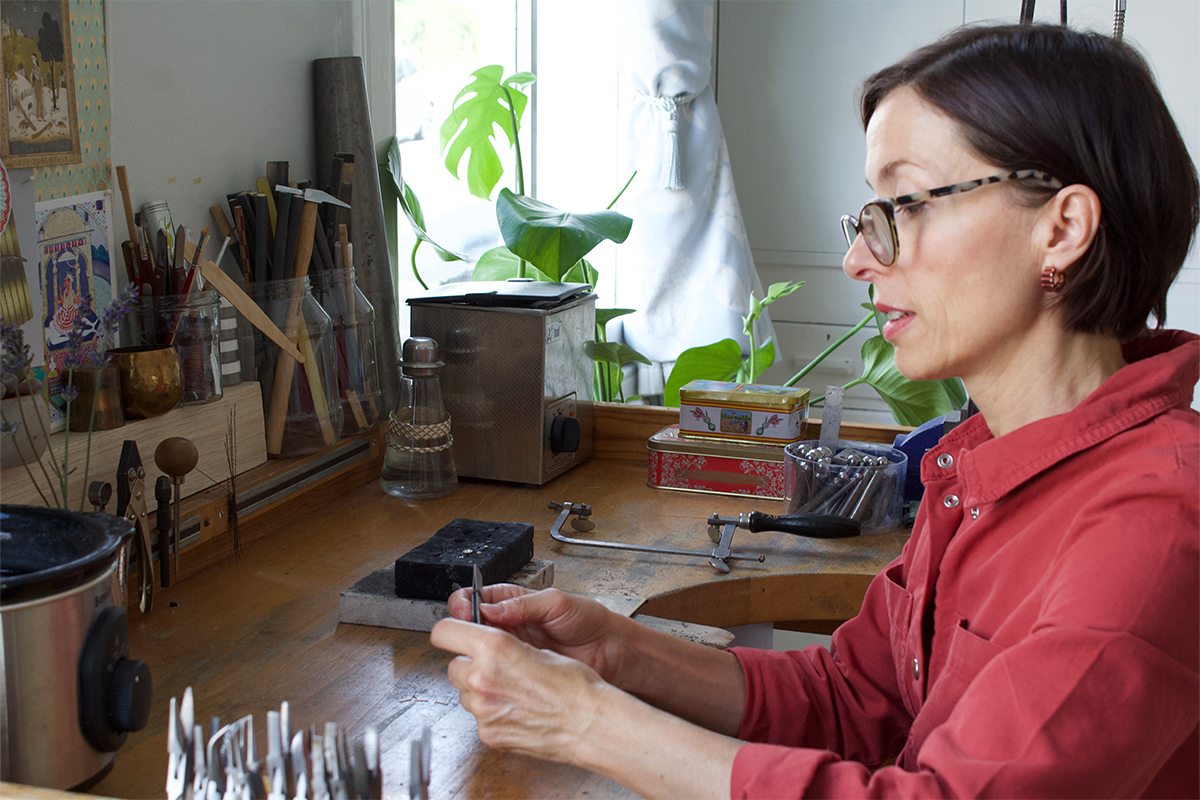
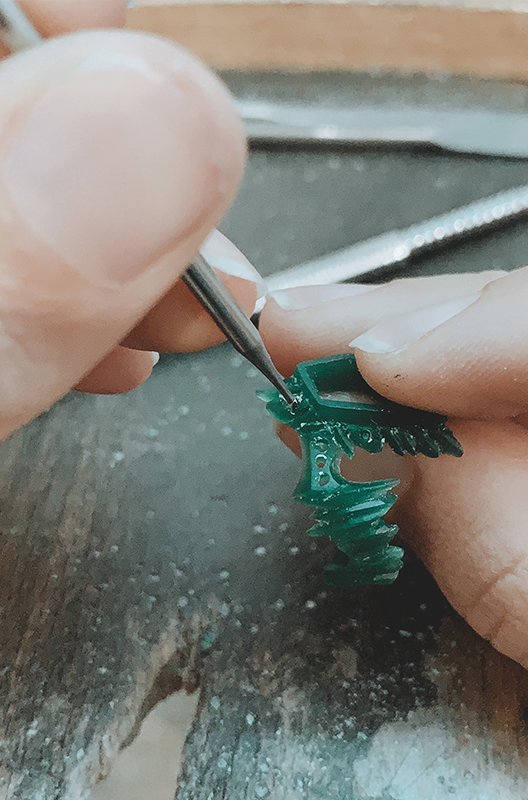

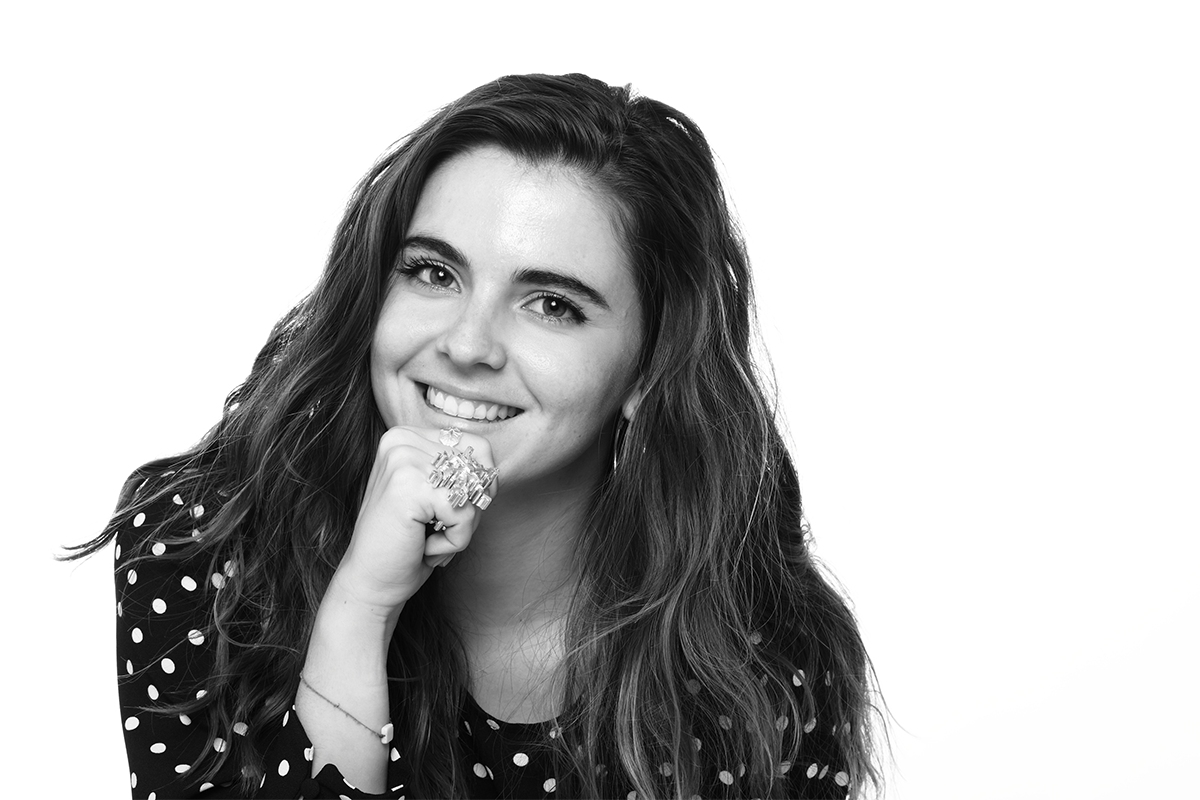
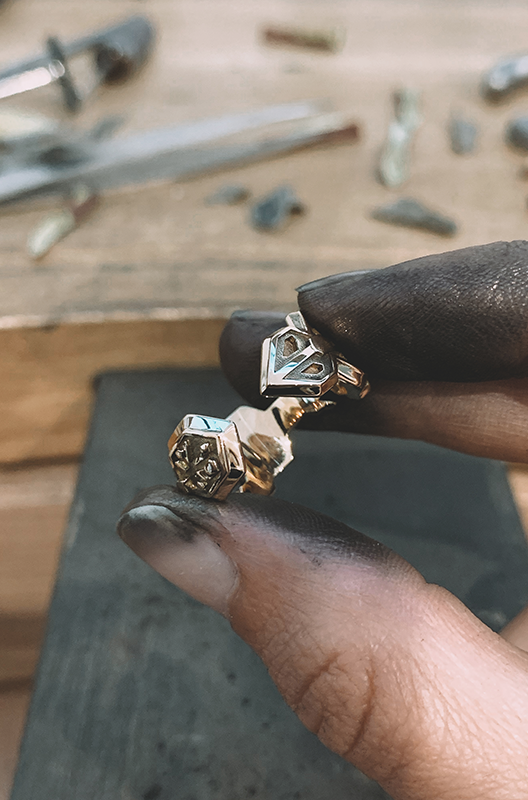

In a delicate illustration of jewellery expertise, the petals of Flora Bhattachary's gold lotus flower earrings gently channel light back to the white diamond pistils at their centre. Bahattachary's designs start out on paper, but it is not until the wax modelling stage that they really come into their own. "Wax carving enables me to 'see' a piece in 3D," says the jeweller, "it's how I test out alternative designs before making." As a highly trained designer-maker, she crafts much of her work herself in her studio at London's Goldsmiths' Centre, the UK's leading charity for the professional training of goldsmiths. For this former history student, deeply influenced by Indian jewellery artisanship, design is inseparable from jewellery craft.
----------
"A lineage of makers"
----------
Unlike pure jewellery designers who focus on creating and refining unique ideas before entrusting production to an expert workshop, designer-makers frequently hand-craft much of their work themselves using traditional techniques handed down through generations of jewellers. The Director of the Goldsmiths' Centre, Peter Taylor, expands: "We have an incredible range of skilled jewellery designers and makers in the UK whose work is realised through traditional hand skills, keeping those skills alive and evolving. By passing on their knowledge at the bench, they inspire and encourage future craftspeople to aspire to excellence".
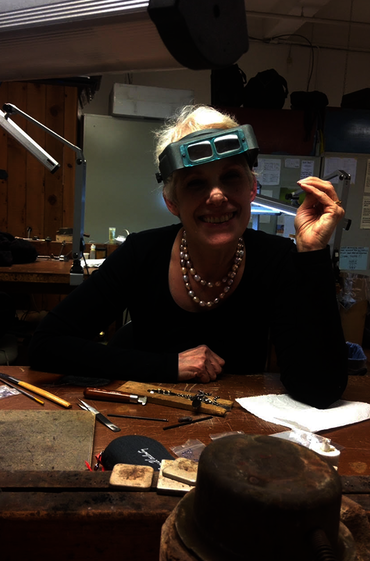
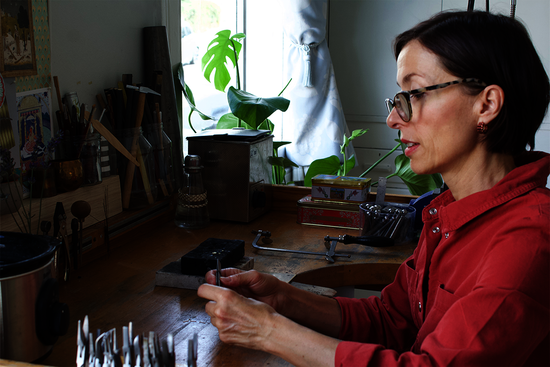
The joy in hand-making for a living, is tangible as Bhattachary describes the satisfaction of a jewel well-made. For Deborah Meyers, a New York City-based studio jeweller inspired by Ancient jewels just as much as the work of contemporary artists like Antoni Tàpies and Gerhard Richter, "the act of making is a spiritual process." She sees the idea of a continuation of skills as key to her role as a maker "I love the notion of being part of a lineage of makers, taking a traditional technique and then giving it a contemporary spin." Alongside bench craft, she has studied ancient goldsmithing techniques and wax carving, all of which she employs with an intuitive approach driven by that same sense of history.
----------
"Where tradition dovetails with tech"
----------
Traditional technique is less of a selling point for Capucine Huguet, a young jeweller whose work carries a timely message about climate change and encourages reflection on the future. "My jewels are the story," she says. "Regarding technique, I want to do the best to make my drawings reality." After technical training with prestigious Paris houses like Cartier and Van Cleef & Arpels, her jewellery studies took her to London and an MA at Central Saint Martins, which she completed last year with a reduced collection after the outbreak of the Covid-19 pandemic. Her work is now a compelling blend of Parisian high jewellery artisanship and London creativity.
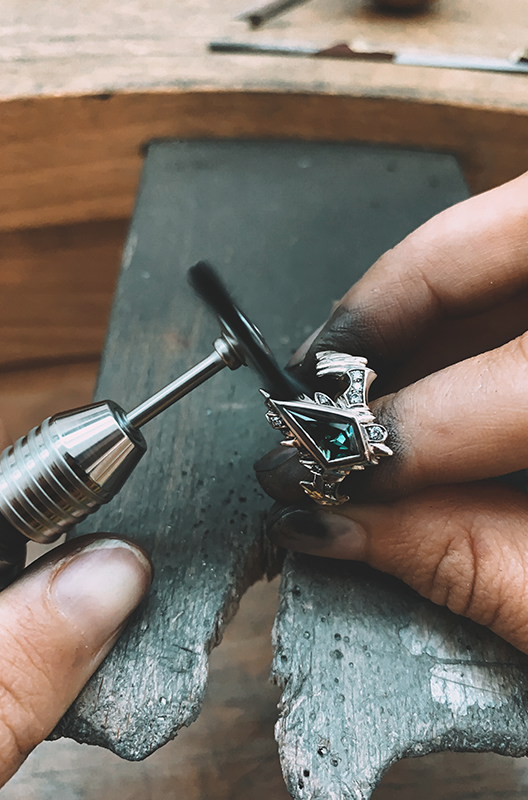
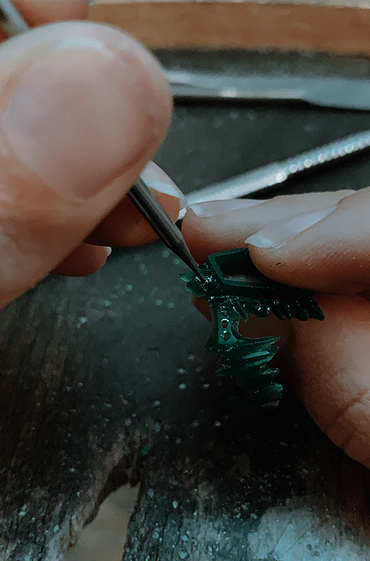
A fan of lost-wax casting that dates back to Ancient Egypt, she is also curious about technology and has embraced Computer-Aided Design (CAD) software despite not initially clicking with it during her studies. It enables her to explore new forms and textures that would not be possible by hand: "if I need to do very tiny details or geometric shapes, CAD is fantastic," she says, referring to the Fissure ring, a study of melting snow inspired by a research trip to the Wahlenbergbreen glacier in Norway. Bhattachary also believes CAD can be a useful tool that widens design possibilities, but that for a piece to feel truly "balanced" it should be used alongside hand-modelling, carving, setting and other techniques.
In the UK, "traditional skills are employed alongside new technological processes, like Computer Aided Design, 3D printing and laser welding," says Taylor. "Innovative approaches to aesthetics, material use and production are constantly emerging and merging, challenging convention and pushing the limits of what is possible.” As possibilities widen, makers are seizing the opportunities afforded by new technologies; Meyers, too, is interested in how tech is shaping jewellery craft, she has been inspired by couturier Iris van Herpen to explore 3D printing.
----------
"I'm more creative when I'm doing it all myself"
----------
Being able to - even if you choose not to - carry out each part of the production process yourself is the ultimate creative freedom, according to Huguet: "I couldn't image not doing it, I'm much more creative when I know I can do it all myself." But what emerges strongly, is a sense that running a business as well as designing and producing most of its output is where the challenges lie for today's hand jewellers. "It can be hard to switch gears from being the maker to being the entrepreneur," says Meyers, of the shift in mindset required to sell the work she has made herself.

Time constraints on the business side of things mean that it is simply not practical to make each piece end-to-end, and most successful designer-makers call on a network of skilled artisans for support at key points in the process. Good makers, who have a practical understanding of how their materials behave, make good designers and years of practice in stone-setting, for example, means that Huguet can prepare her work better before it is sent to an expert setter. For Bhattachary, working with renowned lapidary Charlotte de Syllas on her Indian-style carved gemstones has helped her deepen her knowledge of different stones and inspired experimentation, lending her work a sculptural quality.
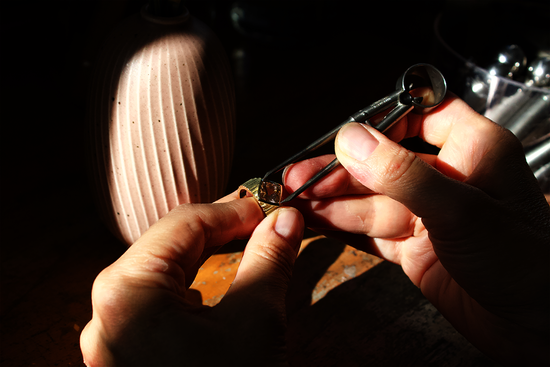
Looking forwards, our designer-makers are all planning to immerse themselves even further in their craft through a greater focus on bespoke work. Bhattachary is keen to incorporate more gouache painting in her one-of-a-kind commissions, as a way of honouring the making process with clients. Over in New York, Meyers is hoping to reach a wider international audience and would love to see the jeweller's craft itself inspire more people to work with their hands. And while Huguet is eyeing growth at the very start of her career, it's her positive message about climate change that she hopes to build on in the years to come. And harnessing the latest technology alongside hand techniques in a hybrid future jewellery craft, seems a fitting way to do so.
Contributors
 Kate Matthams
Journalist & Editorial Consultant+ MORE FROM Kate Capucine H