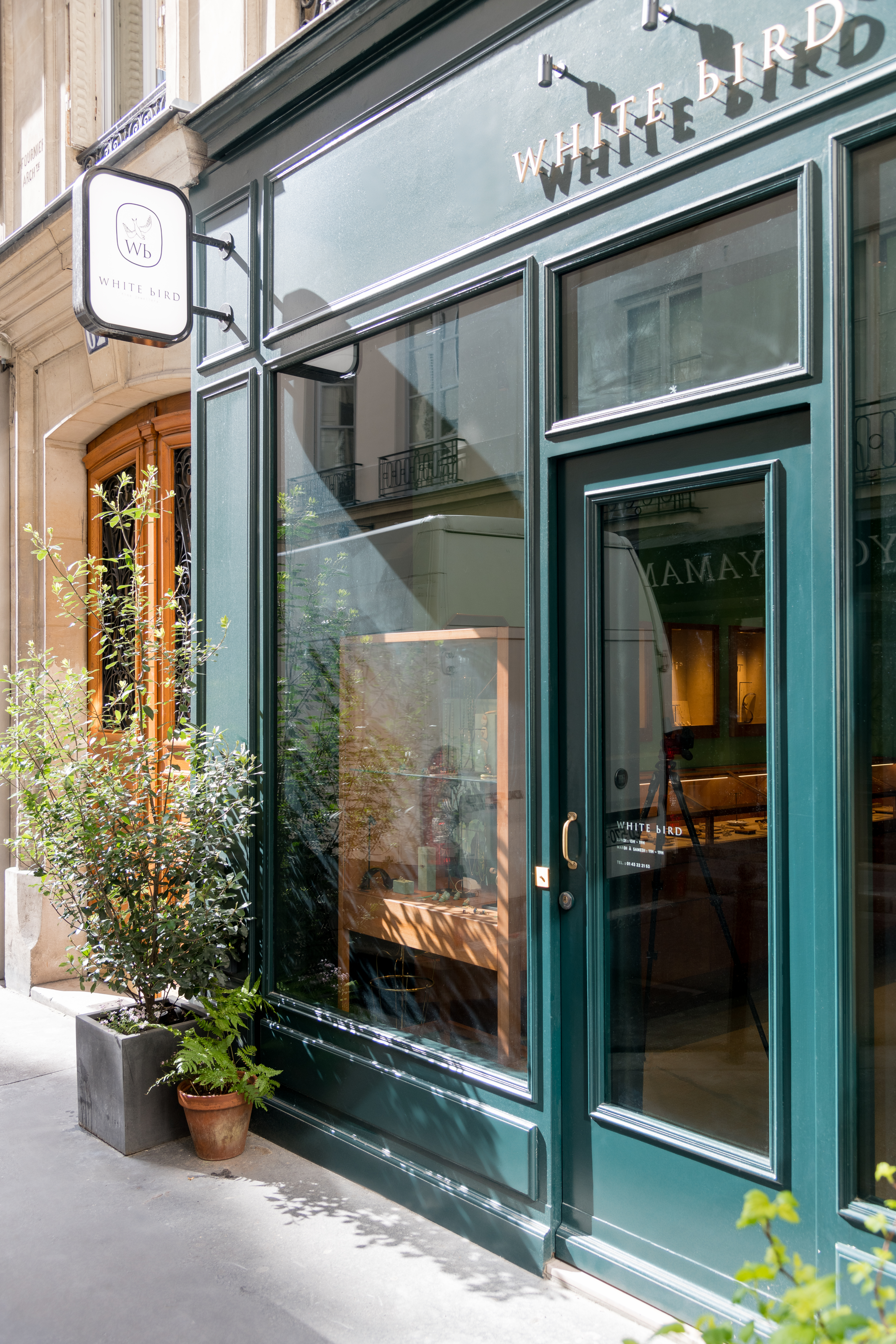
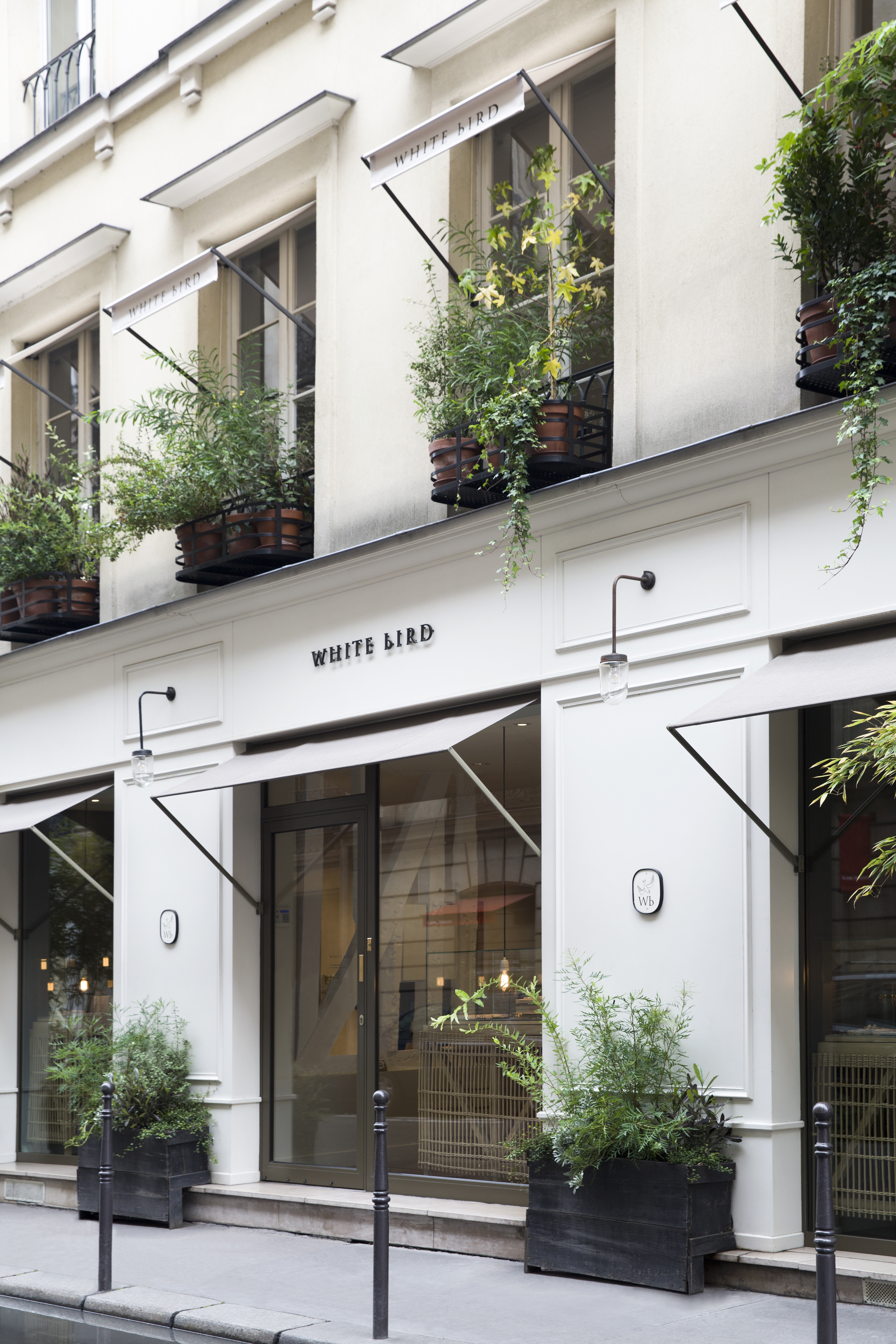
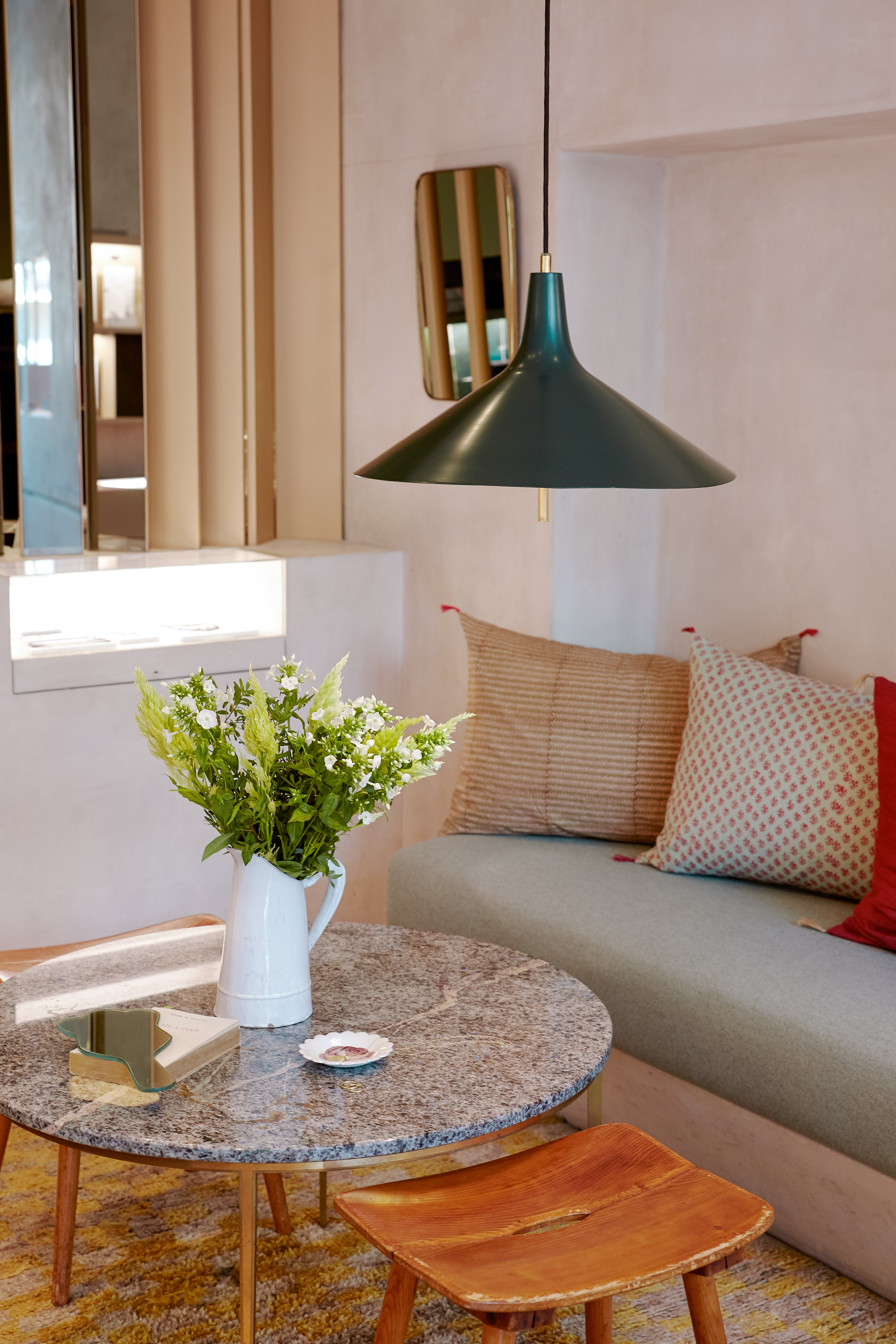
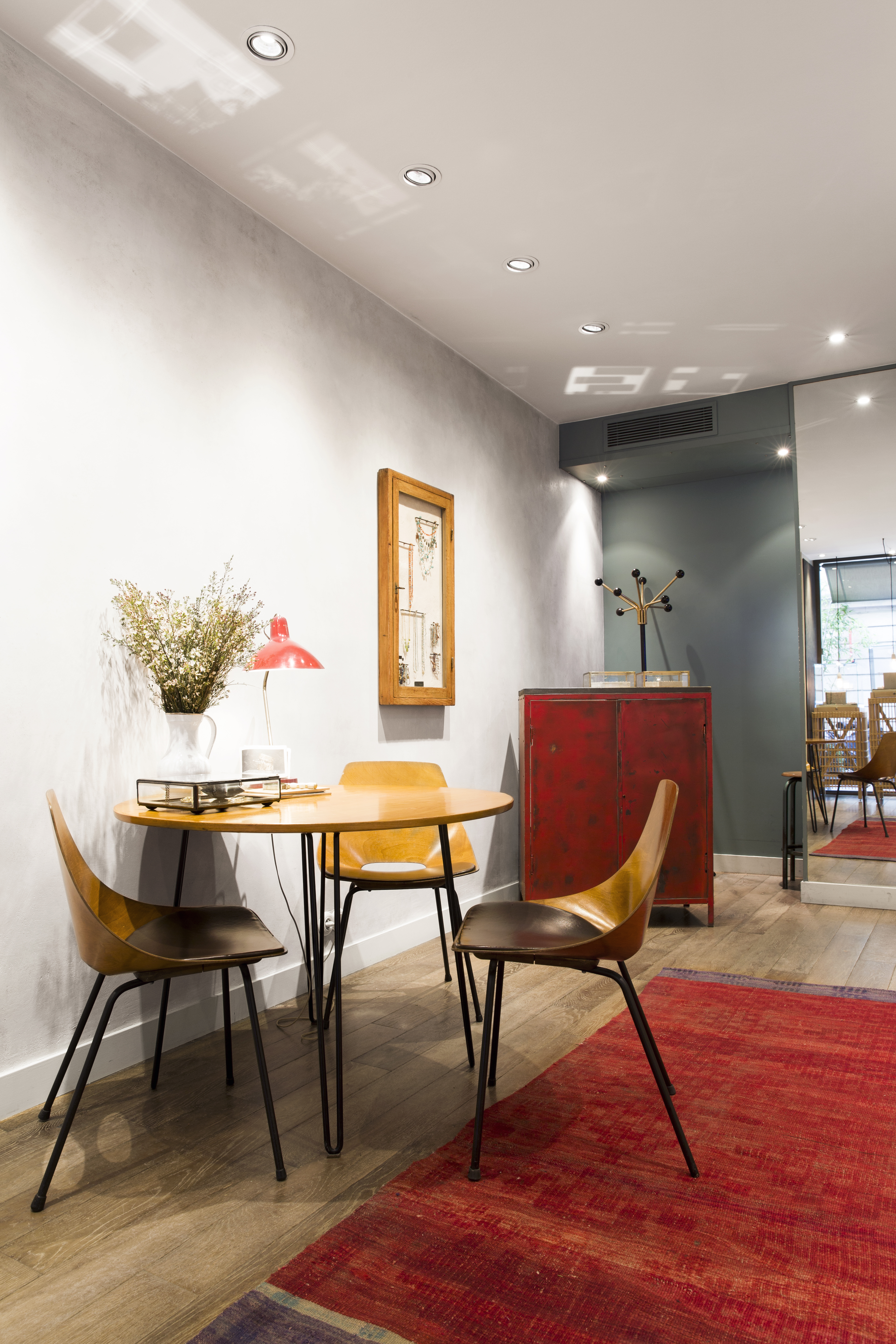
In just over a decade, WHITE bIRD has made a name for itself as the go-to in Paris for independent jewellery design. Each of the three boutiques carries contemporary jewellery design carefully curated by owner Stéphanie Roger, alongside her own line of jewellery foundation pieces. From Cathy Waterman’s intricate whorls and leaves, to Noguchi’s organic diamond clusters, and cast-not-set masterpieces from Polly Wales, Roger hand-picks each piece as something she would wear herself. Her sharp eye, honed over 30 years in the business, sets her firmly at the forefront of the independent jewellery scene.
Kate Matthams Spencer: Hello Stéphanie, it’s great to see you. Perhaps you could start off by walking us through your journey from Place Vendôme to WHITE bIRD.
Stephanie Roger: I actually started at Cartier but my longest stint was at Chaumet, where I gained experience in fine jewellery product development, and then sales, with America and the Middle East, it was a very interesting period. In the late 1990s, I went to Dinh Van, as its founder, Jean Dinh Van, stepped down. I was general manager of what was a small company at the time, doing about €1million in turnover, but with incredible products and very identifiable designs. I stayed for six years, bringing the brand to $15 million by developing stores, distribution partnerships, and new product lines. I left Dinh Van in 2005, by which time I needed a break from brands.
I spent couple of years freelancing in the fine jewelry business, and then was offered an opportunity to create a fine jewelry department at Chloé. Unfortunately, the financial crisis of 2008 put an end to the project overnight, which was a blow after working on it for two years. But that was the push I needed to do something on my own.
At the time, I was getting into fine jewellery from designers rather than brands. I watched what Barney’s was doing in New York, giving brands like Cathy Waterman counter space when they hadn’t previously carried fine jewelry. Independent designers were becoming a very interesting alternative to the big names. I began to think I should do something with what really personally appeal to me, which is the design and the designers themselves, and how they interact with their brands. I spent time thinking about it and decided to open a store in Paris with a small curation of about 10 brands. And that’s how it all started, back in 2010.
We opened with 12 brands, including Cathy Waterman, who at the time had no distribution outside of the US. I had called her, sent her my PowerPoint, and she liked it - I was delighted!
KMS: So would Cathy be your longest-standing commercial relationship for WHITE bIRD?
SR: Cathy, Pippa Small, Lia Di Gregorio, and Sia Taylor are the brands we have carried for the longest. Brooke Gregson, Lito and Noguchi arrived a few months later. There are very few brands that I don't work with anymore - Phillipa Holland is one, because unfortunately the French don't seem to like insect jewellery although I love it - the core of who we started with are still with us.
----------
"I make no concession on the things that I like"
----------
KMS: What's great about WHITE bIRD, is that it’s like your personal jewelry box, you carry a breadth of independent designers with very different styles. If you look at the retail scene in Paris, we've also got the big names like Le Bon Marche, and now Galeries Lafayette. How do you stay one step ahead?
SR: Firstly, we are a small team, so we can be agile in term of service. We like to build a personal relationship between customer and sales associate. If they want a product we don't have, we'll do our utmost to get it for them, because we know our designers. I can call Brooke Gregson, and ask her to remake a piece for a client with an emerald rather than a diamond, for example, I know she will tell me no if she can't, but if she can, she'll do her best for my client. We love old-style service.
Also, I make no concession on the things that I like. Although the designers are all quite different, my taste is the ‘red thread’, as we say in France, that ties it all together. If a piece is a big commercial success but I don’t like it, then I won't take it, because I can't go into my store and look at products I don't like. If people engage with the WHITE bIRD brand, it's also because they feel that there is something very human behind it.
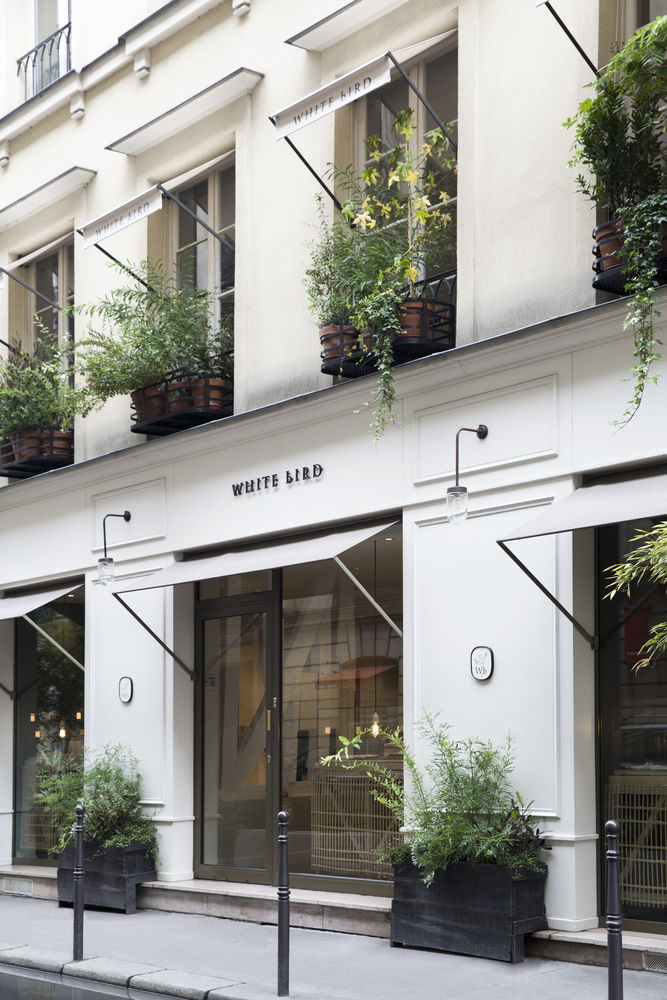
KMS: As a customer, you feel very well looked-after in WHITE bIRD, stepping into a department store is not the same experience.
SR: Big names like Net-a-Porter, Le Bon Marche, Galeries Lafayette, have greater means than us. They have huge communication budgets and a highly skilled team, but our strength is agility for our customers.
KMS: You opened a third store on the Left Bank just before covid hit. It must have been incredibly difficult to then go straight into a pandemic. How have you managed to pull through this period?
SR: The figures were very good right away with the third store (62, rue des Saints-Pères in Saint-Germain), the average spend was higher than what I had expected. But then the pandemic arrived, and we hadn’t had time to build a client base - it takes about two years for people to really know that you are there - so that store is suffering a little more than the two others. It’s an area of Paris that depends a lot on the American tourists who love Saint-Germain, and they can’t come right now. Thankfully it’s quite small, so it wasn’t a huge financial outlay and slowly we are coming back to better figures.
We were lucky that our website was operational and ready to take over. Not 100% of course, but in the last six months we have doubled our proportion of online sales from 15% to 30% on average. We pivoted to web right away and put all our energies into shooting new pictures, improving the site and expanding the offering to communicate as best we can with clients.
We were full-on right from March 18th when France went into lockdown. Even though everyone was working from home, my team focused on the website, on newsletters, whatever we could do to get into people’s homes and regain that sense of contact. A lot of people don't want to buy on the website, so we organized private appointments, which worked well during the second lockdown.
KMS: With social media, influencers, and the whole commercial ecosystem that's grown up around it all, what would you say are the three key factors that draw you to a new brand?
SR: I always look at design first; if it moves me, and if it's distinctive and consistent. Will it bring something new to the selection, that is also interesting and wearable? I think it's important to have a whole story that ticks all those boxes. I definitely look at quality and production, what sort of environmental consciousness is involved, because this is something that can no longer be ignored. Finally, as I said earlier, I'm very much into the human involvement of the designer themselves in the business. It’s a deal-breaker for me to be able to talk, develop new ideas, speed up deliveries for one reason or another.
----------
"Designers should ask themselves ‘What am I bringing to the market?
What is my backstory? What will differentiate me from the rest?’"
----------
KMS: Thinking about the environmental and production, how important do you believe sustainability and ethics to be to the future of the jewelry industry?
SR: I think it’s key, it’s not even a question as to whether a brand does it or not. It’s easy now to get hold of environmentally conscious or Fair Trade gold, it’s harder to really know the provenance of a stone, but it’s important to go as far as you can with it. Each designer talks about their approach to sustainability on the website.
We just brought Viltier on board, a young design team for whom that's very important. Their gold is Fairmined, which involves constraints that bring the price point 10 to 15% higher. But the fact they can say they only use Fairmined metal, and also that their production is in France, for example, or that most of their stones can be traced right back to the mine, is very important. The end customer makes a small effort on price, but it's worth it.
KMS: I think a lot of the impetus for that has come from the consumer.
SR: It’s something that you can feel in the stores. Two, three years ago, people didn't ask about the designers’ ethos, now they make a point of asking about the stones, or whether the gold is Fairmined.
KMS: What do you think gives a jewellery brand longevity in the marketplace?
SR: Design and consistency, bringing new ideas, but still sticking to your core image. Take the example of Sia Taylor. You won't find anything simpler than what she does, little gold dots on chain that make beautiful necklaces, or earrings, or bracelets, and she's been doing that for 15 years. And you can recognize a Sia Taylor necklace amongst 20, but she still brings out collections with new ideas each year.
When added diamonds it didn't really work, because people like her simplicity and the beautiful things she makes with gold and platinum - it’s all about the metal. The stones didn't really add anything to her collection, so she stopped. It’s so important to stay truthful to your clientele.
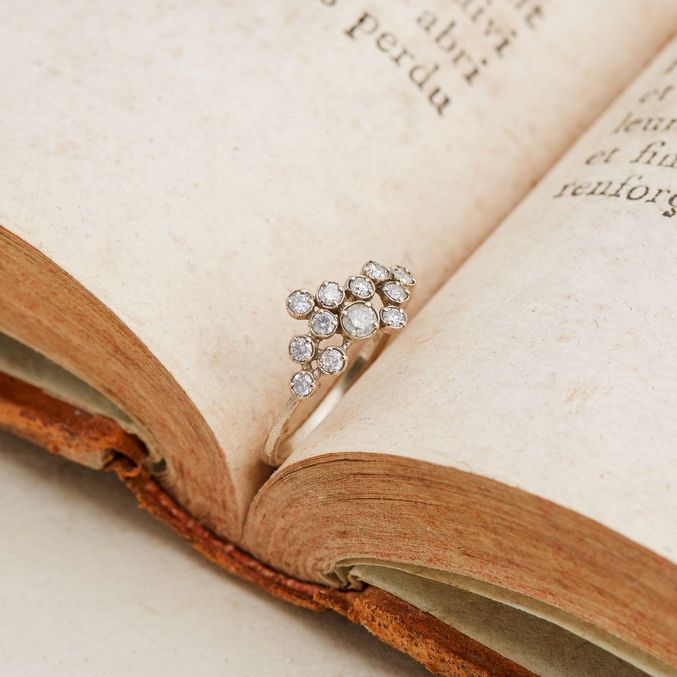
KMS: Who are you watching right now?
SR: At the moment, I feel a little lost, because I’m not really seeing anything new in terms of design. We have been talking to Bibi van der Velden for a few years and we were going to introduce her in early 2020, but the pandemic put things on hold. It’s a brand that needs a lot of attention and we can’t provide that in a crisis, but I’d love to have her in the store.
KMS: There are so many brands that would like to be in your windows, but even with three stores you can’t fit everyone in. What advice would you give to a designer who would like to be at WHITE bIRD?
SR: Designers should ask themselves ‘What am I bringing to the market? What is my backstory? What will differentiate me from the rest?’. It’s about having something to say, because you can have a great idea, but if you don't have a vision of how you're going to continue the story over five years, it's worthless. I don’t take a brand for a few months on consignment and then send it all back, I look longer-term which is why I'm also kind of demanding with the designers.
One of the reasons that we opened three stores was to have more space for brands that are really interesting. The pandemic has shown us that physical stores can be fragile for any distributor, so we have to really curate the brands we take onboard. It’s hard to resist sometimes, but if you have too many, you can’t to present them all properly. It's important to show each designer’s world, you can't carry a brand with five products in the window, it needs to be a wide selection of pieces.
To connect to Kate Matthams please visit the "Services" page on NB
Contributors
 WHITE bIRD
 Kate Matthams
Journalist & Editorial Consultant+ MORE FROM Kate