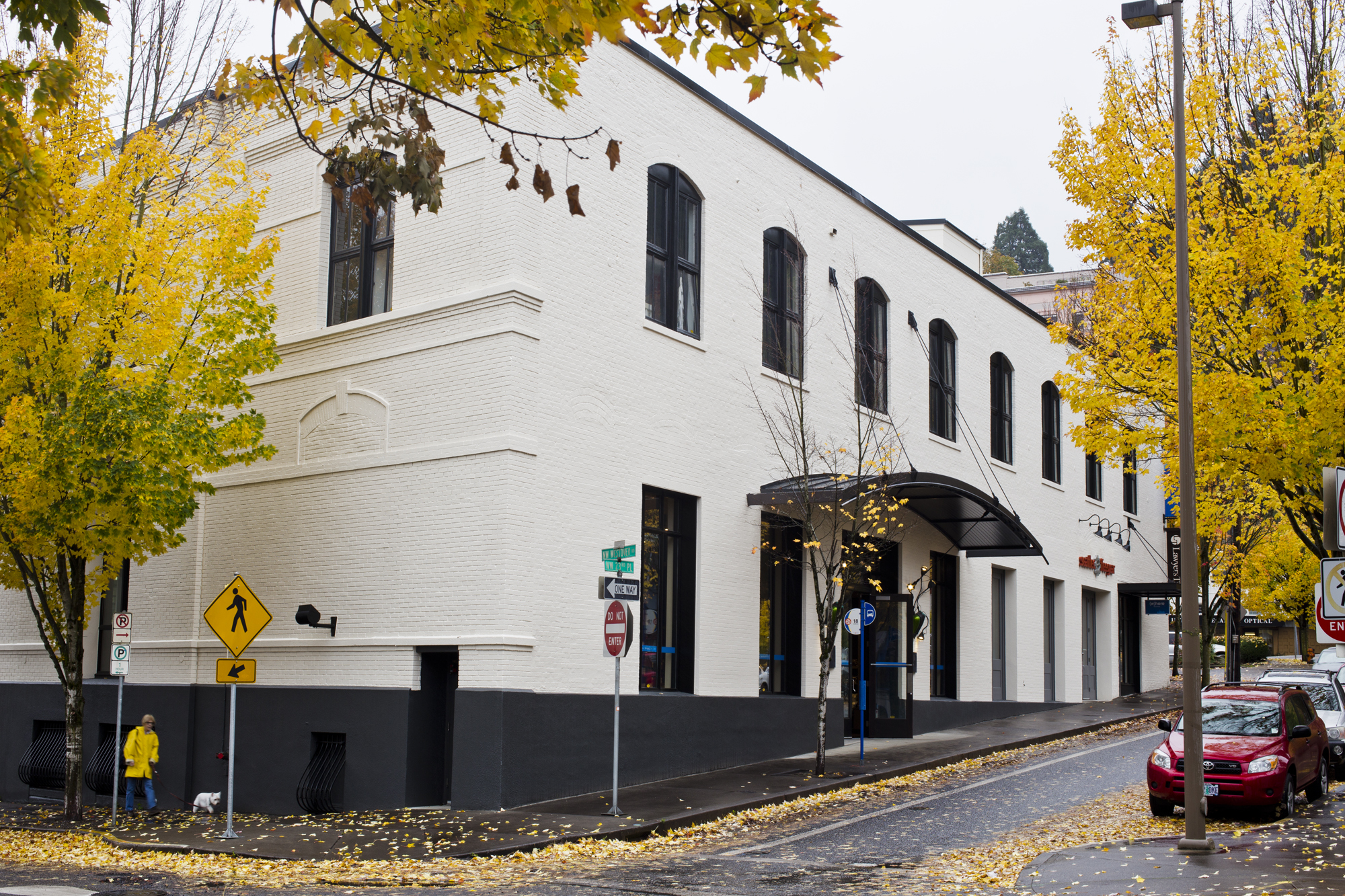
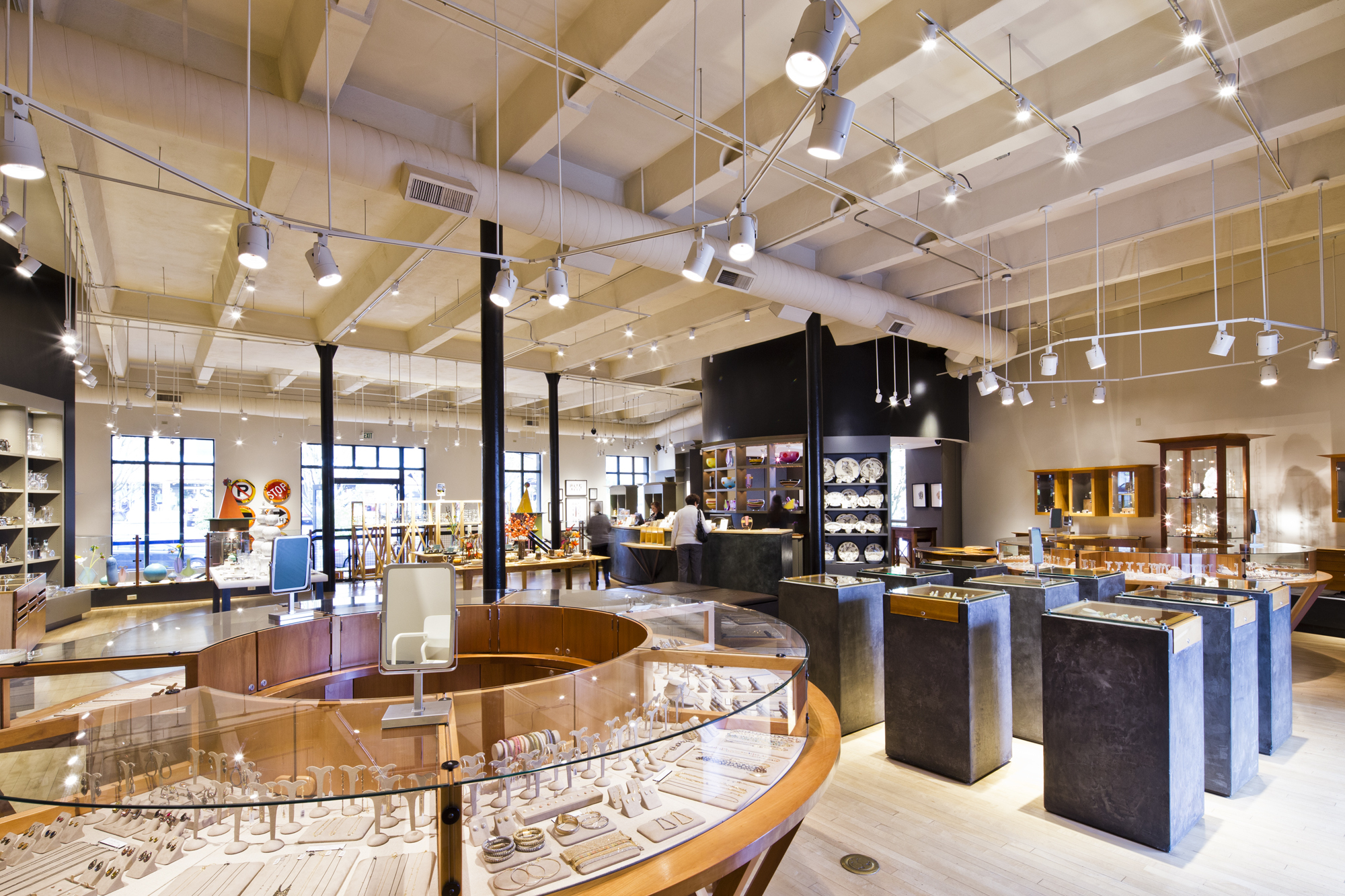
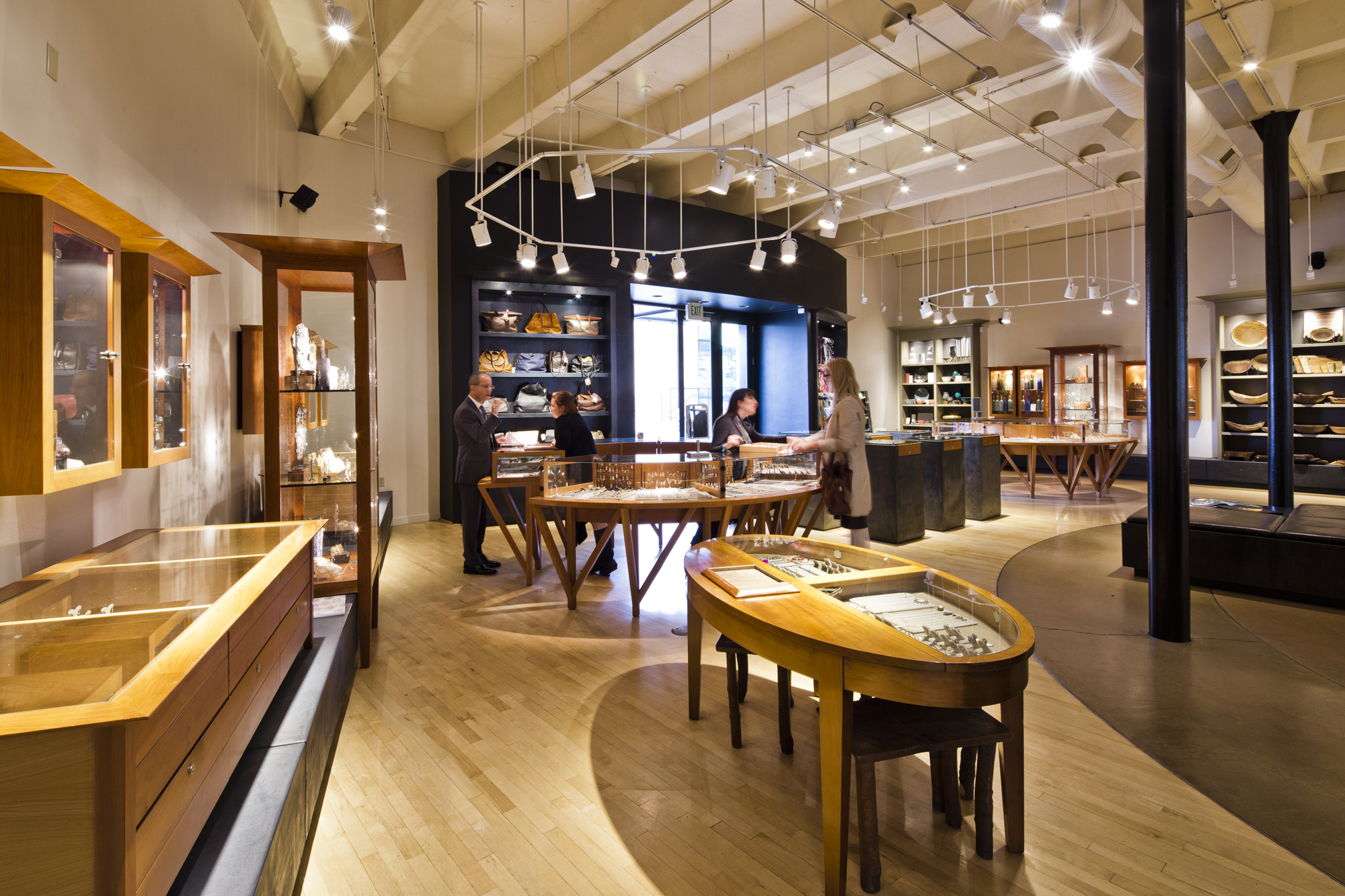
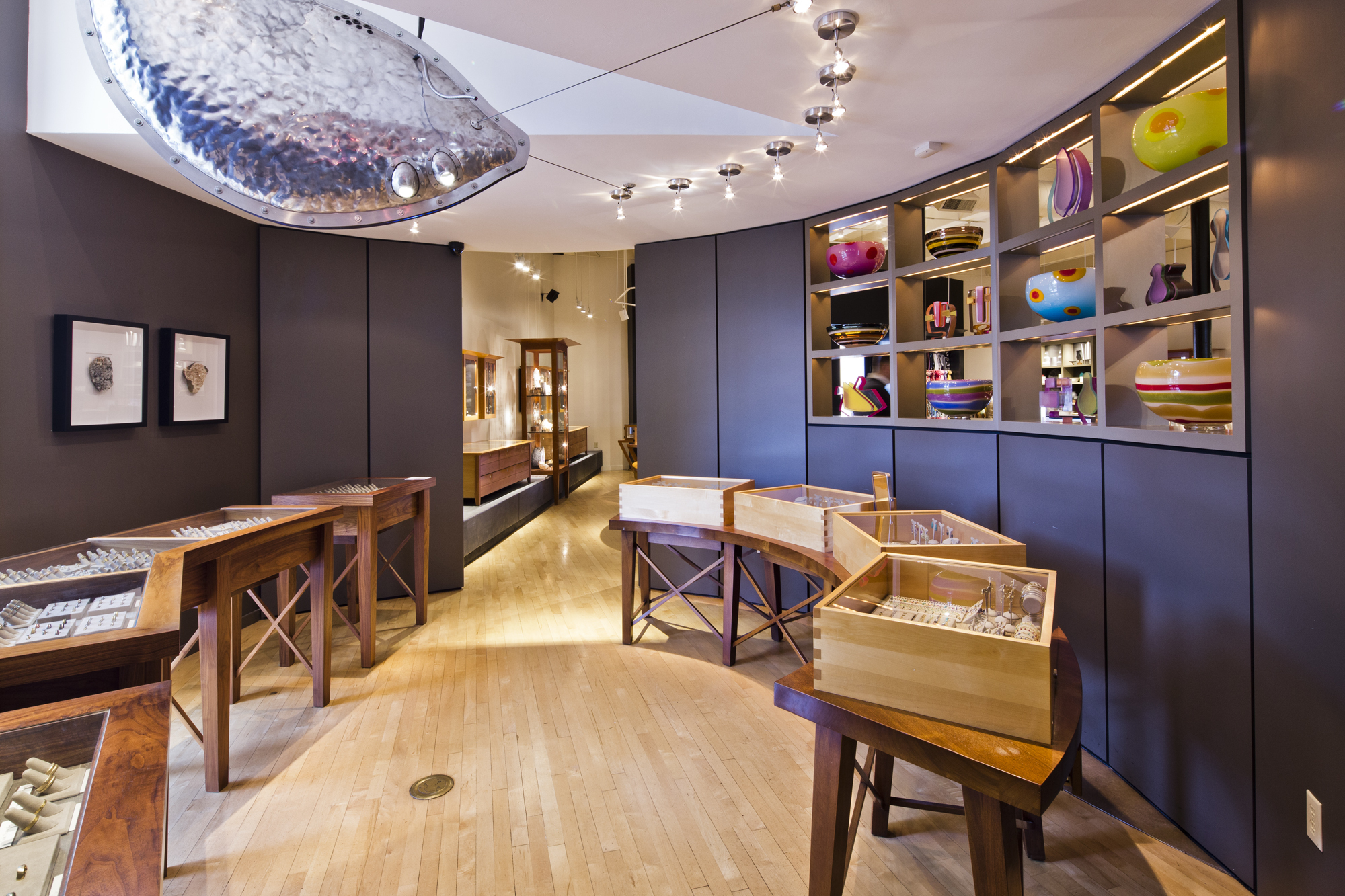
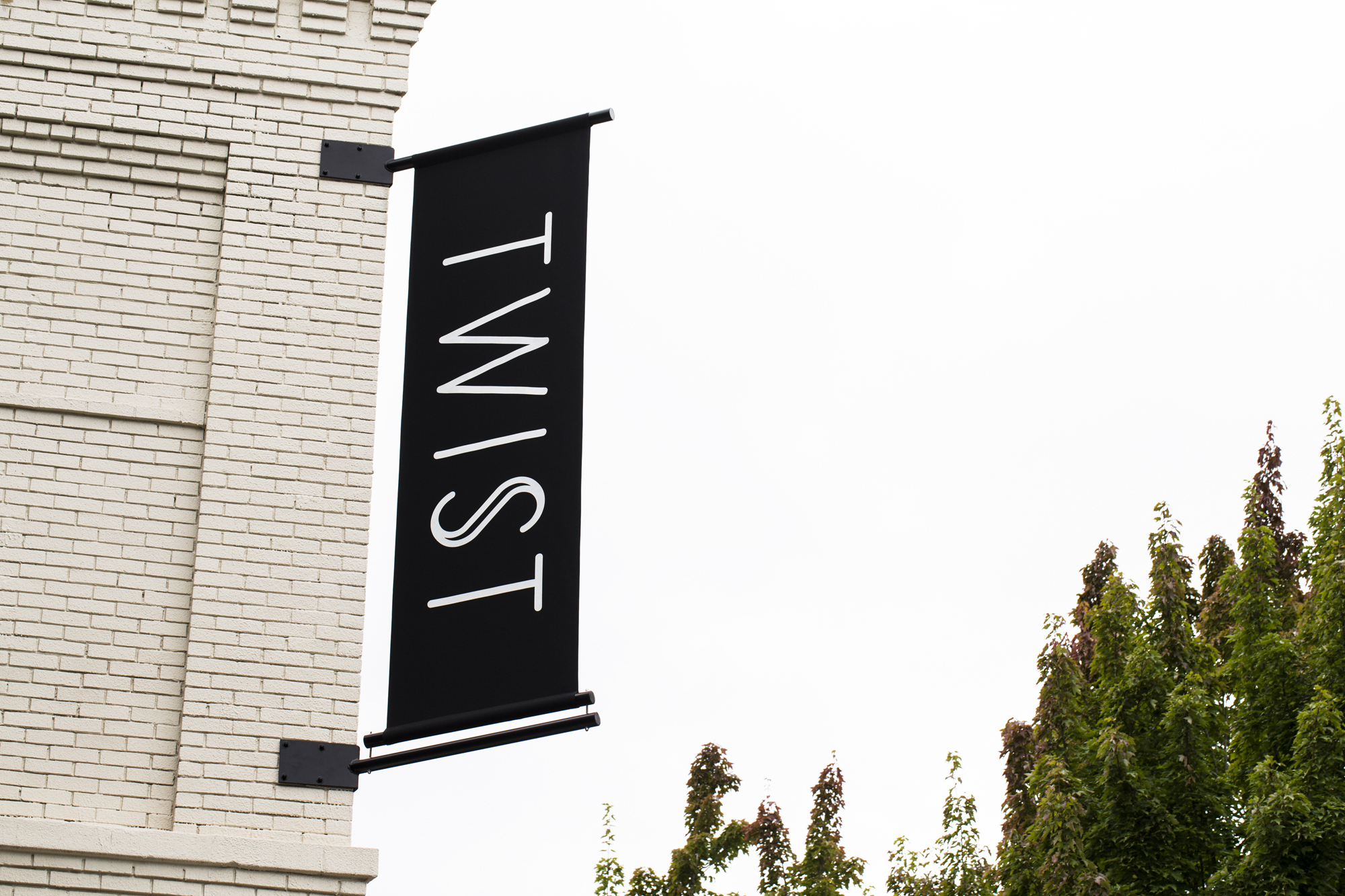
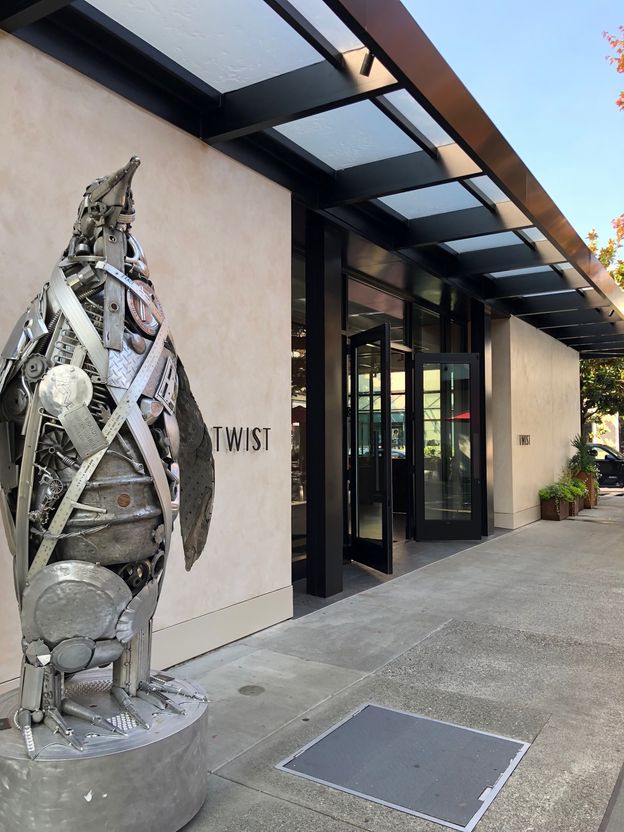
Paul Schneider and Lauren Eulau met at art college. They have spent the past 45 years harnessing their creativity to build one of the industry's foremost fine jewellery retailers, with two Twist stores in Portland and Seattle, as well as TwistOnline, each of which is curated to gallery standard. From starting out over two decade ago selling pieces made by studio artists, Twist now carries independent brands from around the world. The intervening period has transformed the jewellery landscape, but the pair are known for a focus on artistic integrity that has positioned them at the front of the pack.
I know you started off in the art world, Paul. What was your journey from art and curiosities to jewellery, and one of the best-known stores on the planet?
Paul Schneider: Lauren and I were both artists ourselves. Why we are where we are now, has to do with the fact that when we got together while we were still in college, we were making art, ceramics and weaving. Creative design is the core value of our personal relationship as well, beautiful objects that are made by the people. We were surrounded by them, that was our social circle. It then became our business circle.
In retrospect, it's been a slow journey, a fairly methodical movement from one position to the next. We went from making things, to making things and selling our own things, to selling our friends' things, to no longer making things and just selling our friends' things, to selling other disciplines besides ceramics and weaving.
Jewellery came later. It was easy to do once we started paying attention, because what goes into a piece of jewellery and what goes into a piece of art is very similar. It doesn't really matter what the medium is, it's the person and what they bring to their objects that is important. But what we did find is that jewellery, in culture and in society, is something people love to invest in.
Jewellery is one of the things that is a product of your creativity. And people will actually buy, because people have always worn, bought and traded jewellery and it's always been a way of symbolising important events in life, relationships, commitments, things that are precious, things that have meaning.
Many of the jewellers we have worked with over the years started out as sculptors or welders or painters, but now they're making jewellery. Often that is because at some point they realised they're going to have to drive a cab, or they're going to have to teach school in order to support their creative lifestyle. But if they become a a jeweller, it's actually possible to be creative, to express themselves and make a living through that discipline.
The jewellery landscape has changed massively over past 20 years. What are the most fundamental changes to the industry that you have seen, both positive and negative?
PS: Well, the price of entry into the jewellery market has gotten really low and easy. When we started, we only dealt with people that made things from scratch by themselves, they were artists. We were only interested in studio artists, designers making interesting and beautiful objects. You needed a certain level of skill, proficiency and understanding to get a product to the market at that point. Now you don’t need to be an artist, you just need to have money and like pretty things, and you've got a line.
You hire a branding company, you hire a design company, you hire a web developer, you hire a designer, and you put your name on it. And you go on Instagram, and there you are. You knock off whoever you want to knock off. You add your little twist to it. And there you are. However, I really believe that the marketplace is the ultimate arbiter. It's the final, the judge, jury, and executioner. People think, “I deserve to be famous. I deserve to be wealthy. I deserve to be recognised for what I do.” But people will soon realise that they are not in school anymore. You're not going to get credit for just showing up, you need talent, you need a genuine voice. The marketplace will vote with its credit cards. That's reality.
A brand is a living organism and it's got to grow and it's got to develop.
It doesn't mean it needs to get bigger, but it needs to get constant, new energy into it.
You've got to invest in your business or it'll get stale. And if it gets stale, it'll get mouldy, and if it gets mouldy, it dies."
That brings me to my next question. The past ten years have seen a huge increase in the number of professional jewellers. Just after the 2008 crash, there was an explosion of fine jewellery designers. Do you think that we have now reached over-saturation?
PS: If I was a jeweller, I would absolutely feel that way. If I was a jeweller I've got to fight it out with knock-off brands in order to makes sales and survive in the marketplace. However, for us as a store, whether there's 1,000 or 10,000 or 100,000, brands it doesn't really make a difference. We're more affected by the over-saturation of jewellery retailers.
The growth of online retailers is another huge change to the industry. That we've got to keep really close track of, if we didn't focus on what we do, if don’t push ahead to stay on top of our game and become wishy-washy for a quarter, we could really lose our position. So we've got to be on it all the time. But the fact that there's more jewellers from our point of view, doesn't make much difference.
Our focus is on the designers that we have in our cases and finding that new designer that lifts our offering.
You must have seen swathes of designers come and go during your time. What equates to a brand longevity, in your eyes?
PS: Well, it's very important that a designer keeps investing in their brand. It's like all other aspects of life. A brand is a living organism and it's got to grow and it's got to develop. It doesn't mean it needs to get bigger, but it needs to get constant, new energy into it. You've got to invest in your business or it'll get stale. And if it gets stale, it'll get mouldy, and if it gets mouldy, it dies.
Take David Yurman as an example of someone who invests in his brand. He has a huge market and he's got to keep it going. For years people have stayed interested, his collectors have stayed interesting because new ideas, new creations keep coming. He takes really good care of his retailers and does all the right things. Keeps investing in his marketing. Someone may ask "Why would you spend $100,000 on those ads? Everybody knows you." It's because you have to, because that's what's required to keep the brand alive. Some people's goal might not be longevity, but if your goal is longevity, then you need to constantly take care of your brand like you're taking care of a child or a puppy or something you love. It cannot survive on its own.
We have brands that we have carried for years, and then all of a sudden, nobody's buying it anymore, it gets stale. Consequently our orders get smaller. And then we're done. I have brands telling me, "You’ve carried me for 12 years, how can you drop me?" I have to be clear and explain, "It had vitality and the customers wanted it for 10 years. But the 11th year was exactly like the 10th year. The 12th year was exactly like the 10th year. You're heading the wrong way, you have not reinvested". There's not one line we've ever carried that can just say, "I've come up with such a great idea that I never have to invest more into it." It doesn't exist, it's the dream.
"Don't be so focused on where you want to be; focus on how you're getting there now,
because it's the journey that counts, that is where you will win and lose the battle."
In the age of social media, how big a role does it play in brand success? Does it influence how you choose new brands to carry?
PS: No. Well, I should not say no. We definitely are now finding new brands on social media. I'm eyeing Instagram. I pick a designer or a collector and I see who they follow and I go and find them, see who they follow. And I just dig down. Sometimes there's nothing there, but every now and then you find something that's like, wow, look at this. And maybe work on it and it gets you nowhere. But every now and then you uncover a gem, it's just like hunting or going and looking for seashells. There's a lot there but you need to dig.
With social media, we do look to see who's popular. We don’t buy them for that reason. We are fully aware that having a high following on Instagram does not necessarily mean you're selling a lot because if you look into who's following them, it’s very often just jewellers.
One important part or Instagram that brands need to be aware of is that they have got to pay attention to how they are making sales, if they are doing discounts on Instagram that undercut their retailers then they are unwittingly cutting ties with retail stores.
If a brand is going to sell to retail stores, they must pay attention, because the retailer is not stupid. It may be ok occasionally but, if the brand persists, eventually it's going to catch up with them. I have people tell me "I need to do that because I need more cash." I understand but you can't have it both ways. The retailer is not there to only advertise the brand's discounted offers.
Okay, last question. If you could give one piece of advice to a new or existing brand looking to make it in the jewellery world, what would it be?
PS: This gets very philosophical, if it's only one piece of advice. I would say, integrity! Have integrity in what you are doing right now.
I would tell someone: "Don't be so focused on where you want to be; focus on how you're getting there now, because it's the journey that counts, that is where you will win and lose the battle. It's not the place you want to be, it’s doing good now..." if you don’t care about the journey you will never arrive.
There needs to be integrity in design, don’t try to be something you are not. There's no integrity in that, be true to who you are and your design aesthetic. Without that integrity you could make it for a while, you could just luck into something, but you're not going to last very long, because you need more than luck to succeed long-term, you need integrity.
Visit: TWIST
To connect to Kate Matthams please visit the "Services" page on NB
Contributors
 TWIST
TWIST Kate Matthams
Journalist & Editorial Consultant+ MORE FROM Kate