


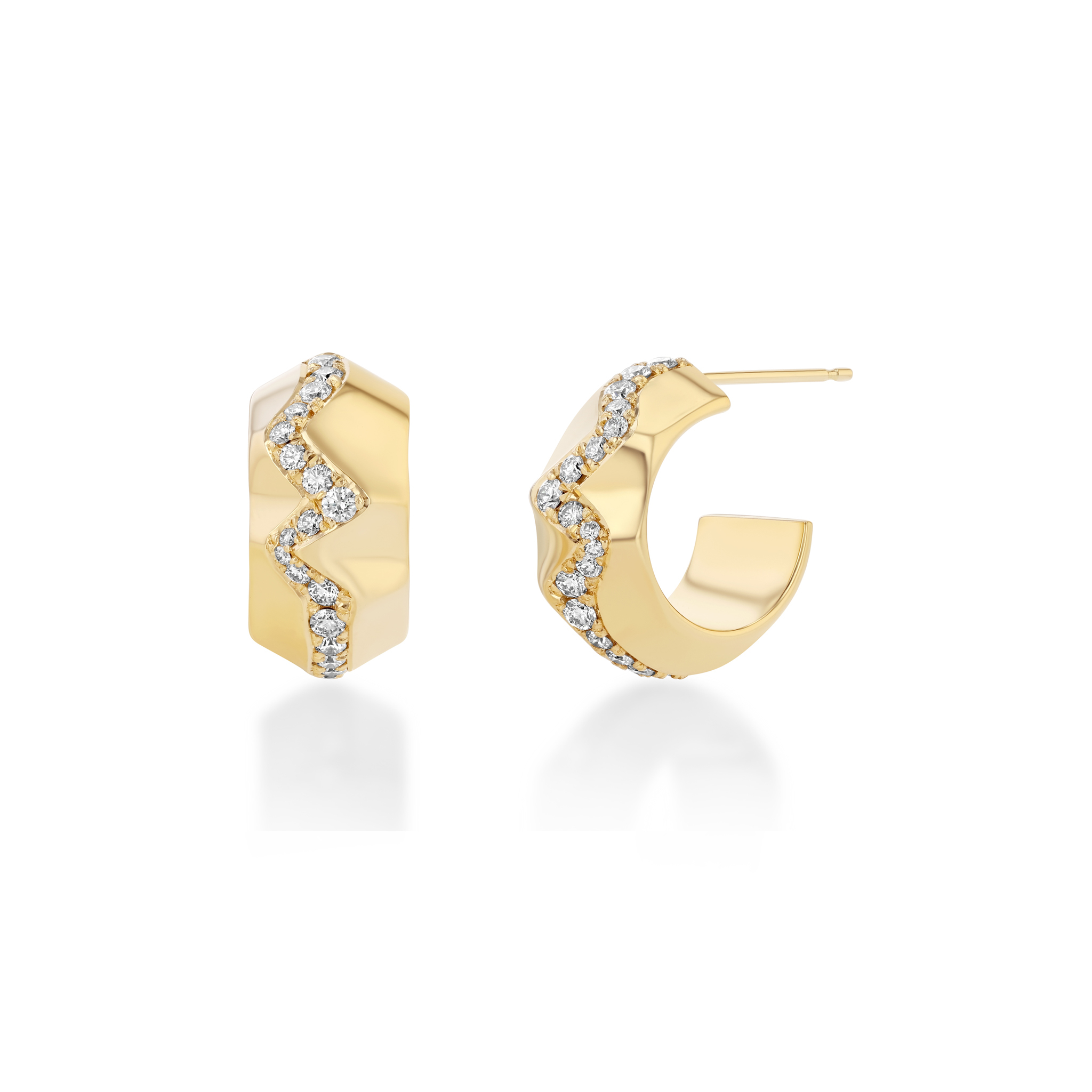

Record gold prices are rewriting the economics of fine jewellery. With traditional retail multipliers pushing prices higher still, brands and stores face an uncomfortable question: compress margins together — or risk pricing out the next generation of customers.
For decades, keystone mark-ups — where retail prices are typically double the wholesale cost — have been an unquestioned standard in the industry. In many instances, traditional retail multipliers have driven finished prices up to 4.2 times or even 4.5 times the production cost. However, as ticket prices rise alongside gold prices, both designers and retailers are now facing a troubling possibility: the real risk may not just be profit margin erosion, but a loss of customers.
“As gold prices continue to rise at record levels, I think the jewelry industry has to debate whether keystone markups still make sense as a default standard,” says Los Angeles-based designer Lizzie Mandler. The wider luxury sector’s critical state, she argues, makes complacency dangerous. “The whole luxury sector is experiencing a massive slowdown and pricing fatigue, and it’s naive to believe fine jewellery will be exempt.”

Mandler points to a structural imbalance. Gold is “dramatically outpacing inflation”, she notes, so this is not merely a question of protecting margins against rent or labour costs. “At some point, the risk isn’t margin loss — it’s fundamentally pricing the customer out of the category,” she says.

Lizzie Mandler
The Illusion of Prosperity
For London-based founder and director of NouvelleBox Darren Hildrow, the optics of rising average selling prices mask a more fragile reality. “While gold prices have surged dramatically, many brands and retailers have chosen not to adjust their margins accordingly,” he says. The result is an industry mistaking inflation for growth. “There is a growing illusion of increased profitability, higher ticket prices creating the impression of stronger margins — when in reality the market is being pushed toward a breaking point.”

Founder & Director of NouvelleBox
His concern is that gold jewellery risks retreating into the realm of ultra-wealth exclusivity. “Gold jewellery is becoming an exclusive product for the ultra-wealthy, rather than a desirable and attainable purchase for a broad customer base,” he warns. If current practices persist, “what appears to be short-term gain turns into long-term contraction.”
The closures of major retailers across several markets serve as a cautionary backdrop. Hildrow calls for “an urgent and honest conversation” between jewellers and retailers about margin structures, arguing that only “collective recalibration” can prevent the industry from undermining its own future.
The pressure is felt most acutely by independent designers operating between artisan values and commercial realities. British designer Alice Cicolini has long kept margins tight to support small-scale production. “I already worked on a structure that looked like x 3.75 and haven’t been in a position to absorb rising costs,” she says. After tax, the margin extended to retailers is “already effectively x2”.

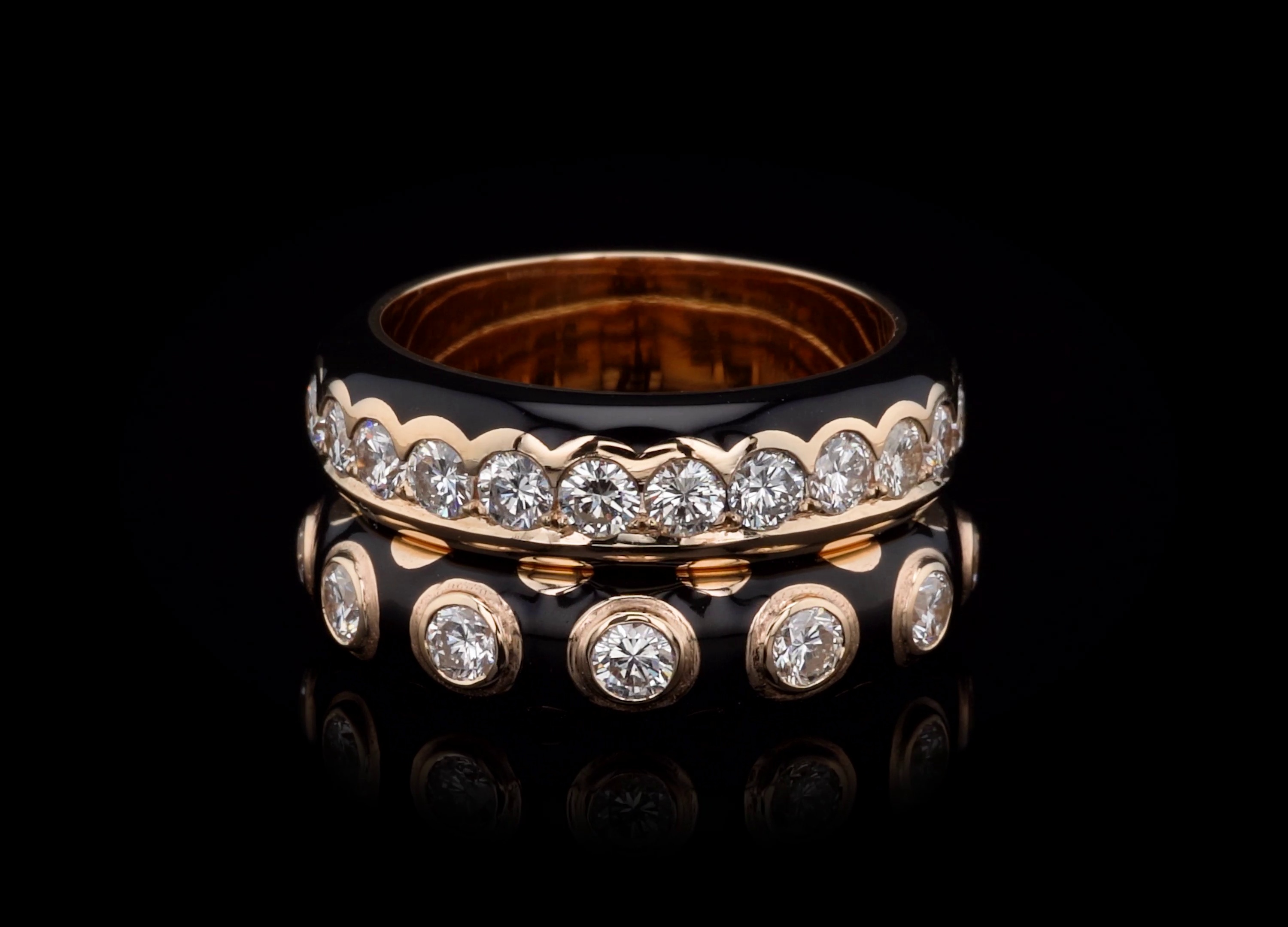
Credit: Studio Marvelry
Retailers, she notes, have been reluctant to move below that threshold, given their own escalating costs. The compromise, in practice, has been strategic rather than arithmetic: an emphasis on made-to-measure and bespoke commissions, where the customer perceives both personal attention and singular product value.
The Wholesale Dilemma
The widening gap between direct-to-consumer (DTC) and traditional retail multipliers has sharpened the debate. With DTC brands often operating at around 3x, compared with 4.2x–4.5x in traditional retail, the wholesale model appears increasingly strained.
Cicolini has largely avoided consignment. “My business isn’t capitalised to support that level of distributed investment,” she explains. For smaller independents, the capital required to sustain multiple retail partners under such terms “will become impossible to provide for more than one or two retail partners, if at all.”
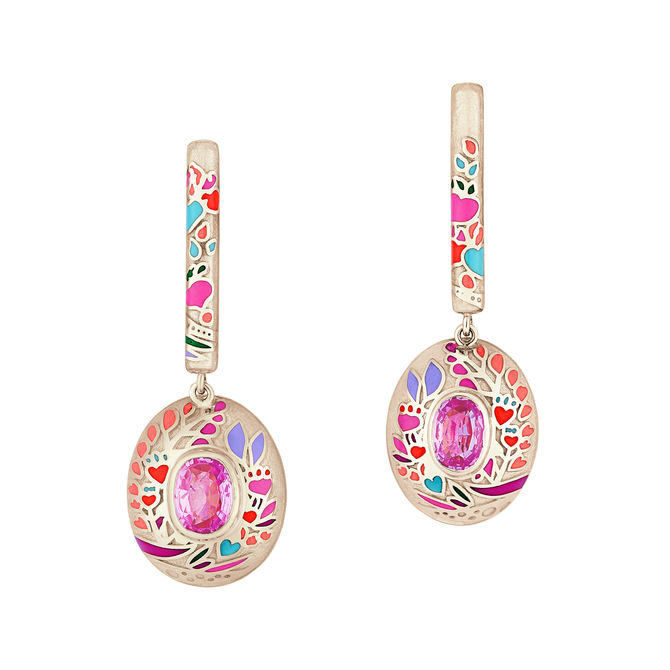
Alice Cicolini
Her response has been to narrow wholesale collections to iconic styles, complemented by one- of-a-kind and “one-of-a-colour” pieces sold through a select group of specialist stores and directly. The shift is as much about control as it is about cost. At a certain point, she concedes, “the x3 margin then becomes a more appealing model for independent businesses who no longer have to match margins to retail pricing.”
Yet she remains unequivocal about the value of expert retail partners. “The access and expertise of a truly specialist and expert retailer is unparalleled,” she says, expressing hope that consumers continue to support smaller independents.
In Beirut and London, designer Nada Ghazal faces a related calculus. Her sculptural, gold-heavy pieces are handcrafted in her Beirut atelier. “Our margins are already low,” she says, making burden-sharing difficult. Her pricing model is “metal neutral,” with increases limited strictly to gold price movements. Now, she argues, collaboration must extend beyond spreadsheets. “We now need to work harder with our retailers to ensure that their teams understand the intrinsic value of our pieces.”

Ghazal also pushes back against the notion that DTC offers an easy escape. With retail boutiques in Beirut and London, operational costs remain substantial. Wholesale, she says, provides access to new clients, market insights, and disciplined, transparent partnerships. The challenge lies in jointly managing product mix and customer education as price brackets shift.
A psychological ceiling?
If the arithmetic is contested, the psychology is equally complex. Cicolini doubts there is a universal ceiling. For affluent clients, higher gold prices can signal longevity and investment. But she predicts casualties in the £4,000–£10,000 segment — the aspirational “bonus” consumer whose discretionary spending is increasingly diverted to mortgages, energy bills, or experiences. Jewellery purchases, if made, may be priced lower.
Ghazal, by contrast, sees not so much a ceiling as a recalibration of intent. “The ‘contemporary’ customer purchasing a piece is now buying for a lifetime, rather than for a season,” she says. Clients are gravitating away from smaller, trend-driven pieces towards bold, sculptural heirlooms whose gold weight is visibly justified.

In this sense, gold’s rally may accelerate polarisation. At the top end, heavy, statement pieces framed as investments and legacies could thrive. At the entry-luxury tier, lighter designs and alternative materials may find favour. The squeezed middle — once the dependable celebratory purchase — appears most vulnerable.
The Path Forward
The industry’s current outperformance complicates reform. As Mandler observes, it is “a harder conversation to have now — while it’s working.” Yet postponement may be perilous. Whether through modest multiplier reductions, from keystone to 1.85x or 1.9x, shared on both the designer and retailer side, or through tighter product curation and greater DTC emphasis, the call for structural adjustment is growing louder.
For an industry built on permanence, the paradox is acute: to preserve its future, it may first have to relinquish some of its most entrenched conventions.
Contributors
 Sonia Esther Soltani
Editor, Writer and Content Strategist+ MORE FROM Sonia