The Turquoise Revival: Designers Reimagine an Ancient Gem
The Meaning and Symbolism of Turquoise
For London-based designer Nadine Aysoy, turquoise is wrapped in childhood nostalgia. “I was 12 when I first discovered turquoise stones,” she recalls. “I visited an Indian reserve in Arizona where they were selling lovely turquoise necklaces. The colours went from sky blue to slightly greenish, and it was fashionable in the mid-seventies. I cherished mine for a long time.” That early influence means the stone still feels protective and calming to her — a gem that can be “retro, fashionable and cool, yet elegant depending on how it is set.”
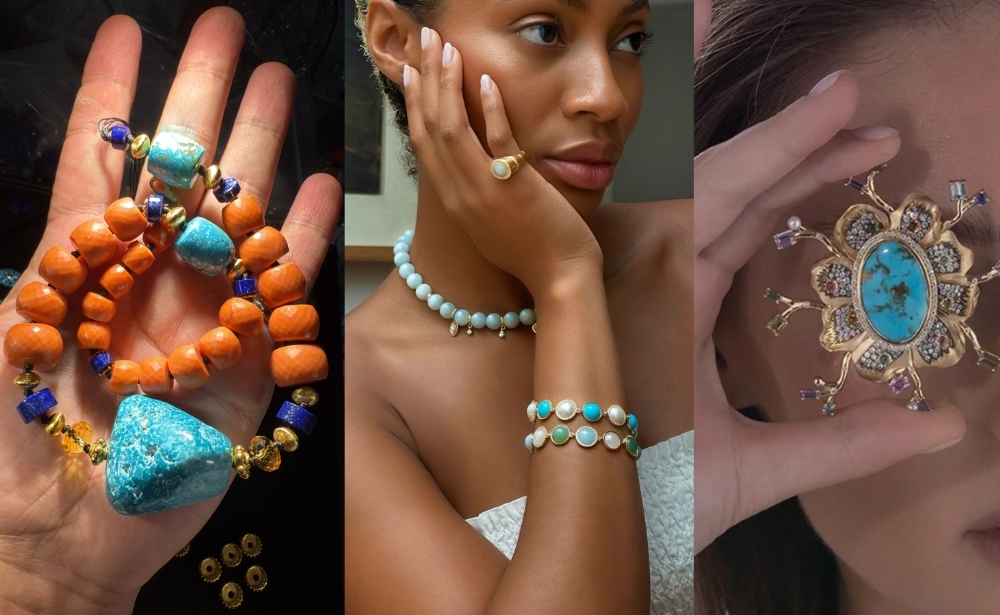
French designer Cyril Bismuth, founder of Aaron Jah Stone, emphasises turquoise’s ancient symbolism: protection, freedom, and spiritual grounding. His relationship with the stone is hands-on and deeply personal: he still travels to the Kingman Mine in Arizona to select rough stones directly with the owners, Marty and Josh.
Greek jeweller Christina Soubli sees in turquoise “protection, clarity, and a quiet kind of strength.” To her, its enduring appeal lies in its ability to feel both ancient and contemporary: “It has adorned people for thousands of years, yet it still feels fresh and alive.”
For UAE-based jewellery artist Mariyeh Ghelichkhani, turquoise is a link to her Persian heritage. “It connects me to centuries of art and culture — from the turquoise domes of Persian architecture to the jewellery passed down through generations. In my work, it’s a reminder that beauty and strength can flow together effortlessly,” she shares.
Joy Haugaard, the creative director of Lionheart in New York and part Persian, echoes this sense of cultural lineage. “Turquoise’s sacred colour is said to mirror heaven on earth,” she says. “To me, this gem embodies elegance, spiritual balance, and a connection to something greater than ourselves.”
Lebanese designer Nayla Arida sees turquoise as an emblem of protection and good fortune. Its shifting shades evoke “the sea, the sky, balance, and renewal,” qualities she channels into modern amulets “imbued with history and meaning.”
Celebrating Natural Variations
One of turquoise’s defining traits is its diversity, from luminous sky-blue cabochons to green-flecked stones threaded with intricate matrix.
For Ghelichkhani, the beauty of the stone lies precisely in its variations. She uses minimal settings or contrasting textures to amplify the veins, tonal shifts, and imperfections that give each piece individuality. “It’s about honouring turquoise’s authenticity,” she explains.
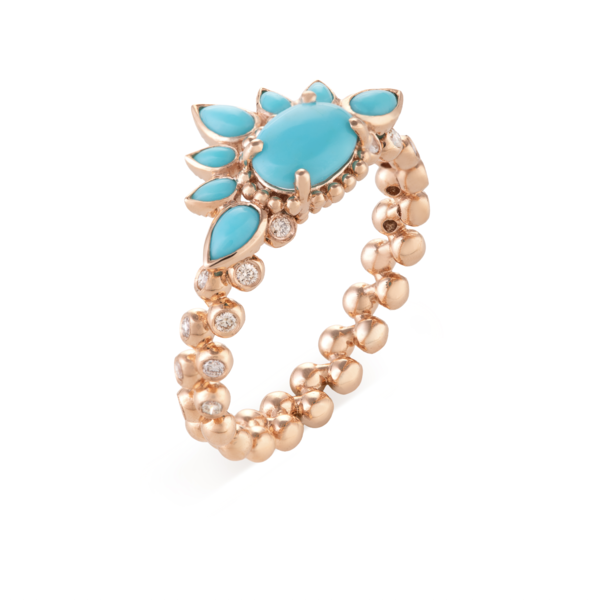
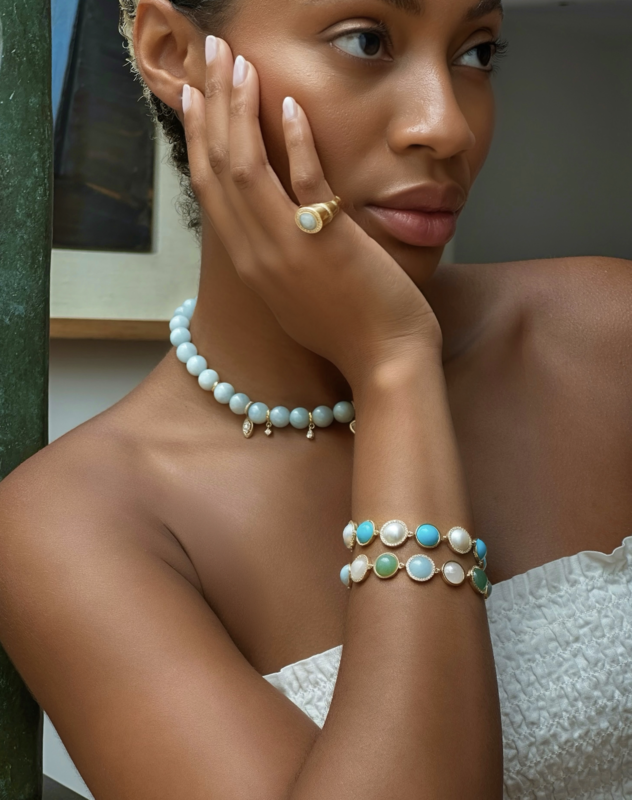
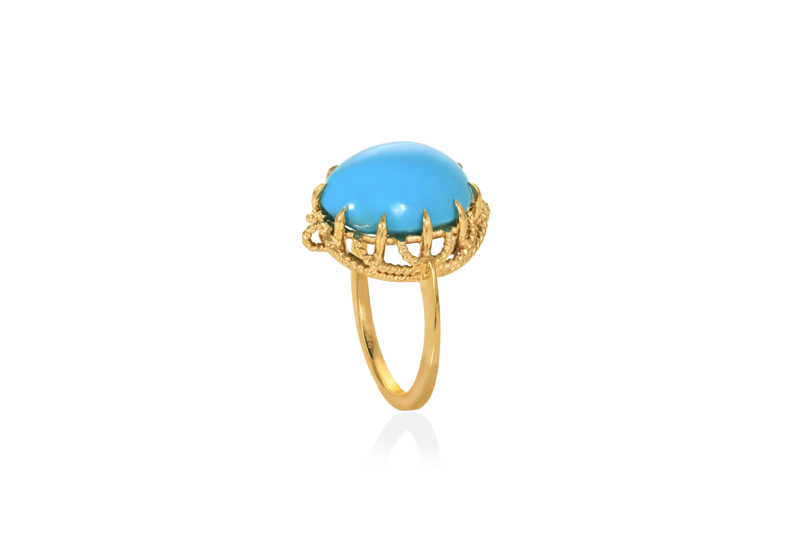
Aysoy focuses on purity of colour: the clean sky-blue and soft greenish hues that pair so elegantly with yellow gold, diamonds, and pearls. She selects stones carefully for carving, ensuring “smoothness and unified colour,” creating a refined, elevated look.
Bismuth, by contrast, revels in the irregularities that make turquoise unique. Genuine, untreated turquoise is increasingly rare, he notes — “most turquoise used today is fake or reconstituted.” When he can source 100% natural stones, he highlights “every imperfection — the veins, the matrix, the texture. I never try to standardise turquoise. I let each stone express its own character.”

Soubli approaches each gem as a miniature landscape. Matrix lines and hue shifts become design cues: clean gold settings for stones that should speak for themselves, and organic forms or hand-carved details to echo a stone’s natural texture.
The Art of Pairing Turquoise
Each designer brings turquoise into dialogue with other gemstones to highlight its vibrancy, depth, or serenity.
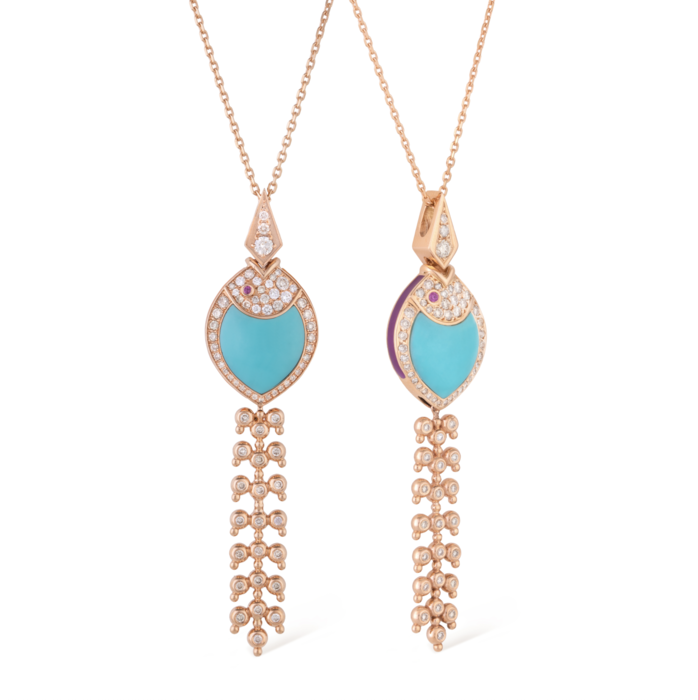
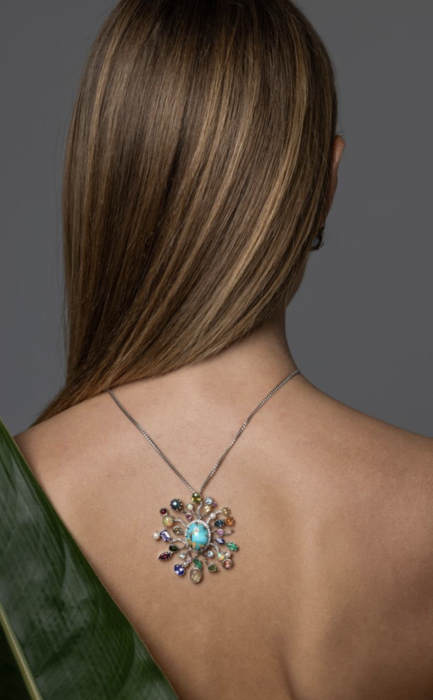
In her Empower collection, Ghelichkhani surrounds Persian turquoise with diamonds for clarity, rubies and emeralds for contrast, and a rainbow of sapphires to create “a halo of energy and emotion.” Freshwater pearls soften the palette, adding grace and femininity.
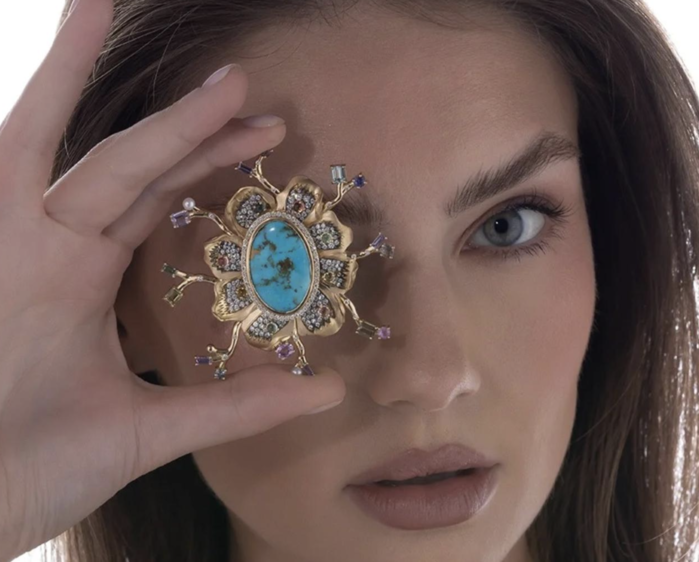
Bismuth favours bold, unexpected combinations: coral for strong contrast, sugilite for depth, lapis lazuli for an antique mood, and rich gold to complete his statement pieces.

As for Soubli, she often pairs turquoise with vivid emeralds or warm gold to heighten its vibrancy, and with soft neutrals such as pearls to bring out its tranquility. Occasionally, she chooses a bolder contrast, such as red enamel, as in her Love Letter necklace.

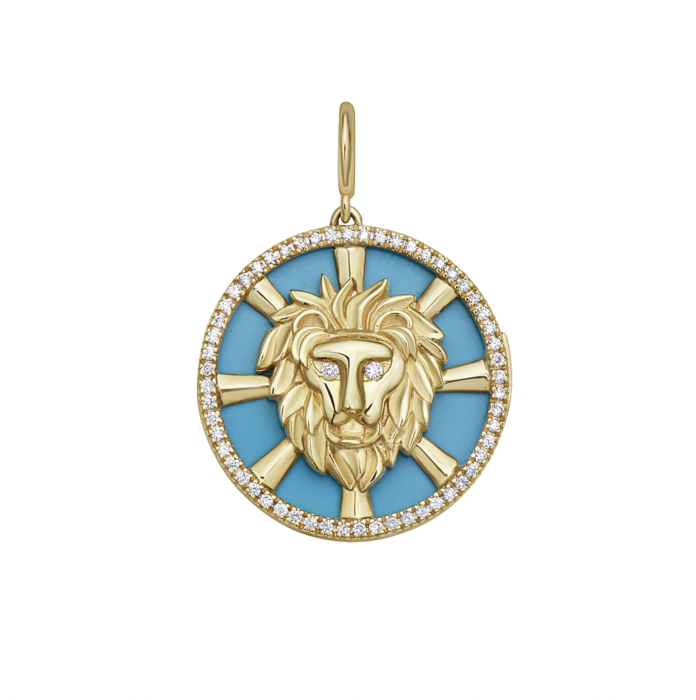
Haugaard uses gold and fine diamonds to enhance the luminosity of turquoise in her Lionheart creations. She also mixes the stone with emeralds for a regal touch or pink sapphires for what she describes as “an icier vibrancy — fresh, feminine, full of energy.”
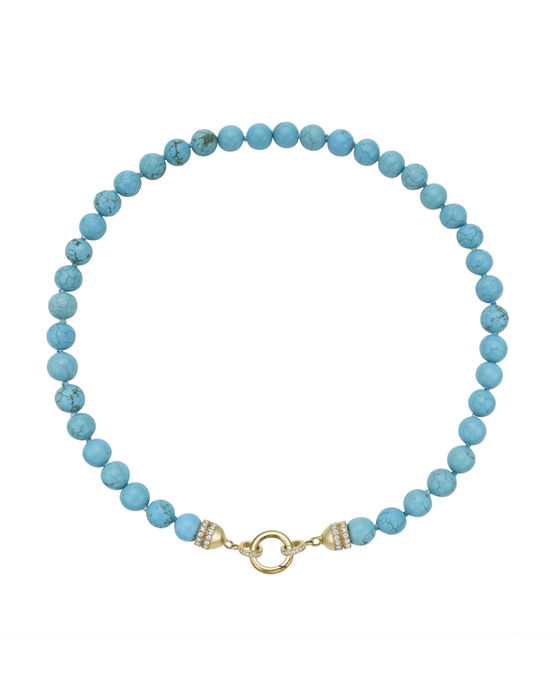
Aysoy likes to keep turquoise “the star of the show.” She elevates it with diamond pavé in earrings and rings and uses her signature illusion setting in necklaces to intensify the stone’s glow. In bracelets, she blends turquoise with pearls and diamonds, creating “visually harmonious jewellery” where colour and lustre complement one another.

Its natural variations, spiritual symbolism, and striking colour ensure that turquoise — though celebrated as December’s birthstone — remains a timeless, year-round favourite for designers and collectors alike.
Contributors
 Sonia Esther Soltani
Editor, Writer and Content Strategist+ MORE FROM Sonia